
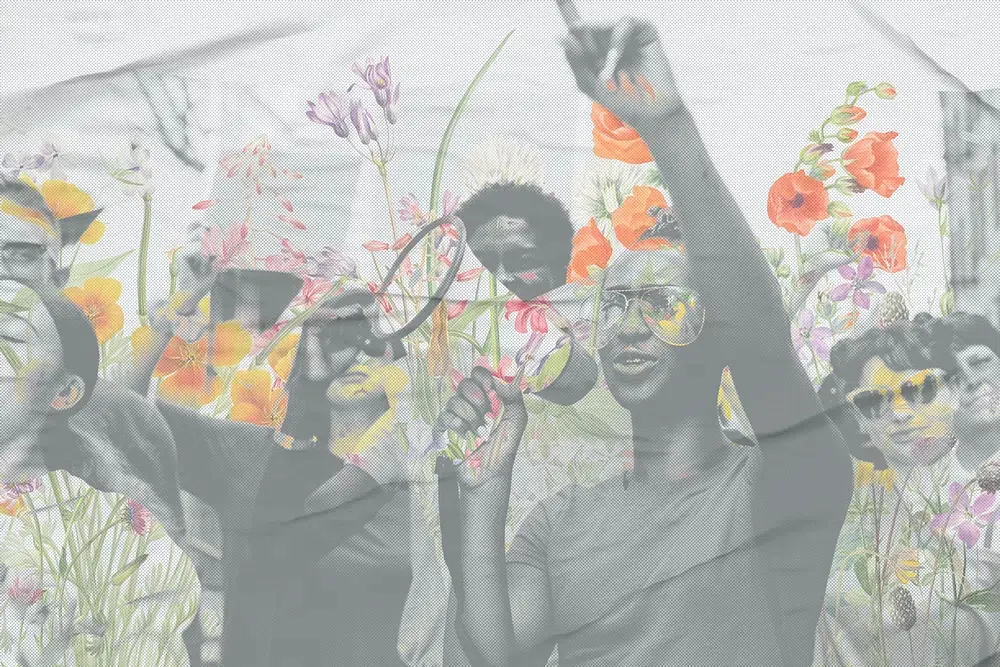
Current Global Debates About Human Rights
The International Human Rights Regime is made up of the 1948 Universal Declaration of Human Rights, the 1976 International Covenant on Civil and Political Rights, and the 1976 International Covenant on Economic, Social and Cultural Rights. It is a system of declarations and treaties that countries are expected to obey once they agree to them.
Benjamas / Rawpixel
- Published
- Last updated
- The International Human Rights Regime is the basis of international human rights.
- Some people argue that human rights are colonial.
- Some people think there is too much emphasis on civil and political rights.
- Some people argue that human rights undermine cultures and communities.
- Human rights cannot solve large-scale worldwide problems.
Subtopics
Learn more
Subtopic 1
The International Human Rights Regime
Updated 6 October 2026 · GPA Photo Archive / Flickr
- The International Human Rights Regime is made up of the 1948 Universal Declaration of Human Rights, the 1976 International Covenant on Civil and Political Rights, and the 1976 International Covenant on Economic, Social and Cultural Rights. It is a system of declarations and treaties that countries a
The international human rights regime is a system of declarations and treaties that the United Nations began formulating in 1948, starting with the Universal Declaration of Human Rights. A declaration is a statement of principles that a State can vote for at the UN. Treaties are laws that countries are expected to adhere to once they ratify (legally approve) a treaty. Declarations are often considered “soft law” that countries should adhere to even in the absence of treaties.
The International Bill of Rights [IBHR] is composed of the UDHR, and the International Covenant on Civil and Political Rights [ICCPR] and the International Covenant on Economic, Social and Cultural Rights, [ICESCR] both of which entered into force in 1976. A covenant or treaty enters into force when a specified number of States has ratified it.
These documents are statements of principle. It might seem obvious to readers that the principles of human rights should apply universally. However, there is much debate among scholars and activists about whether human rights should be universal. Activists and scholars also point out many other problematic aspects of human rights, as discussed below.
Subtopic 2
The Debate about Universality
Updated 6 October 2026 · Canva Pro
- Some critics believe that international human rights law is a colonial or Western creation. However, 56 countries participated in formulating the Universal Declaration of Human Rights in 1948.These include many non-Western countries, such as Soviet Bloc and Latin American countries, China and India.
Some critics deny that human rights are universal. They believe that the human rights regime is a colonial creation[1] , reflecting the views and wishes of the Western world, or the global North. In fact, 56 countries collaborated in formulating the UDHR. These included many non-Western countries, for example, Soviet Bloc and Latin American countries, as well as China and India. Both Soviet Bloc and Latin American countries had distinct conceptions of human rights, especially “economic” human rights, which influenced the formulation[2] of the UDHR.
Sub-Saharan African countries did not participate in the formulation of the UDHR, as they were colonies at the time. However, many representatives of African nationalist organizations lobbied the UN for the UDHR. They pushed for Article 2 of the UDHR, in particular, which stated that everyone had human rights, even if they were still inhabitants of colonies. This was especially important as the colonial powers of the time had actually opposed[3] extending human rights to colonial subjects. As former colonies became independent, they participated in formulating the ICCPR and the ICESCR, as well as new treaties such as the 1969 International Convention on the Elimination of All Forms of Racial Discrimination, and the 1987 Convention against Torture and Other Cruel Inhuman or Degrading Treatment or Punishment.
The one group consistently left out of formulating the international human rights regime is Indigenous peoples, who do not have their own countries. All Indigenous peoples are subject to the power of whatever State they reside in. In general, they do not have an independent say in formulating or applying any UN human rights documents. Indigenous peoples did, however, contribute to the formulation of the 2007 UN Declaration on the Rights of Indigenous Peoples.
Subtopic 3
Critical Perspectives on Human Rights
Updated 6 October 2026 · Whisba / Pixabay
- Critics of human rights argue that they are too liberal; that they are overly judicialized; and that they reflect a male point of view. In general, they contend that human rights stress civil and political rights rather than economic, social and cultural rights. One can reply, however, that civil an
Some critics argue[4] that human rights reflect Western liberalism, especially its stress on individual freedom. They argue that too much emphasis is placed on civil and political rights such as protection from torture, freedom of speech, and the right to vote. This stress on individual freedom ignores the set of equally or more important economic and social rights, such as the rights to food, health care, and education. This is so even though both sets of rights are included in the IBHR.
Some critics argue[5] that human rights have been overly judicialized. They claim that matters that should be decided by governments, or by discussions among groups or individuals, become legal matters for courts to decide. This, critics argue[6] , is an example of Western judicial imperialism, in which Western norms of justice become universal norms, overpowering local or indigenous legal systems.
Some feminist commentators argue[7] that human rights are also too male. Human rights stress formal, legal demands against governments or other perpetrators, instead of informal means of dispute resolution, which women supposedly prefer. Moreover, these commentators argue that women are more interested in economic and social rights than civil and political rights. Their chief concern is taking care of their families, not speaking in public or participating in politics.
Two responses can be offered to the criticism that there is too much stress on civil and political rights. The first response argues that these rights have a strategic value. Without them, people cannot act in their own interests against the forces that oppress them. If speaking your mind about a government that steals your food gets you landed in jail and tortured, for example, then your right to food is meaningless. Women, like men, can be persecuted by governments for various reasons, such as their ethnicity or religion. They, therefore, need the right to speak out and take part in politics in order to defend their own interests, even if those interests are mainly to feed and educate their children.
The second response argues that civil and political rights have an intrinsic value. They cover many aspects of human existence that most people want, such as freedom of religion or the right to practice their own culture, a right covered by the ICCPR in Article 27. People also want the right to belong to a community or a nation. This is especially relevant for Stateless people, who officially belong nowhere, and live in a state of uncertainly with no rights and no one to protect them, even though the UDHR in Article 15 says everyone has the right to a nationality.
Subtopic 4
Community vs. Individualism
Updated 6 October 2026 · Markus Spiske / Unsplash
- Some critics believe that human rights are too individualistic; that they undermine communities and cultures; and that they ignore human duties in favor of human rights. These critics argue that human rights undermine the collective obligations that communities need to survive.
Some critics worry[8] that human rights undermine communities. This can happen if human rights contradict local customs, which often arises in cases involving women’s rights, children’s rights, and LGBTQ+ rights. This can also happen if human rights undermine local belief systems, as in the case of freedom of religion. Currently some African[9] and other governments, including Russia[10] , argue that LGBTQ+ rights violate their own traditional, religious and cultural norms.
It is argued[11] that human rights also focus too much on the individuals’ claims against the state, the community, or even the family, in the case of women’s and children’s rights. That is, they undermine the sense of collective obligation that communities need to survive. They teach people to put their own desires above the collective need, principles, and ethics of the community they live in.
Thus, it seems to critics that people have rights but no duties. The human rights regime is based upon the principle that States have the duty to uphold human rights. The problem seems to be that individuals do not have similar duties. This is the case even though the UDHR in Article 29 states that “Everyone has duties to the community in which alone the free and full development of his [sic] personality is possible.” Human rights, in this view, reflect individuals’ desires, rather than their actual needs as expressed in international human rights documents.
The international human rights regime creates cultural clashes. For example, insisting that a young girl has the right to sex education could be seen to undermine a community’s norms regarding abstinence before marriage. Insisting that gays and lesbians should enjoy human rights could be seen to undermine the entire institution of marriage. Insisting that Indigenous people[12] stop using corporal punishment of members that violate their rules could be seen to undermine their way of making sure individuals obey community norms.
In general, critics argue[13] that human rights drive a wedge between different sectors of the community who might previously have lived together in harmony.
Subtopic 5
Large-Scale International Problems
Updated 6 October 2026 · Engin_Akyurt / Pixabay
- Some critics argue that human rights cannot solve the large-scale international problems of the 21st century. These problems include inequality, underdevelopment, climate change, and warfare.
Critics also argue that human rights cannot deal with the pressing, large-scale problems of the 21st century.
Among these problems are the harms created by the global capitalist system. It is argued[14] that human rights cannot help remedy the increasing inequality in the world today. It is not enough to have a regime that stresses minimum economic rights such as the right to food. Yet there is no human right to minimum levels of inequality, or any way to use human rights to prescribe a maximum level. Nor can human rights specify the public policies that are needed to provide an adequate standard of living, as prescribed in Article 25 of the UDHR.
Either new sets of human rights, or new ways of dealing with large-scale worldwide problems, are needed[15] to face collective threats to all humankind or to specific groups in the world. One such collective right is the right to development, protected by the 1986 UN Declaration on the Right to Development. This right is essentially the right of developing countries to be protected from exploitation by developed countries. If properly implemented, it would require wealthy countries and corporations to modify investment, lending, banking, trade, and aid practices as applied to poorer countries. It would also protect local workers and populations from the harms caused by foreign banks and corporations.
The entire world is now threatened by climate change, yet human rights — grounded as they are in individual claims — cannot deal with this existential threat. Although there have been cases[16] of people suing government entities for not protecting them from climate change, in general individual human rights cannot solve this problem. Nor can a human rights declaration of principles or even a treaty force States to do what is necessary to mitigate climate change and prevent utter disaster.
Similarly, human rights cannot solve the problems of war and peace. Prevention of war and guarantees of peace seem beyond the capabilities of the human rights regime.
Subtopic 6
Sovereignty and Human Rights
Updated 6 October 2026 · United States Mission Geneva / Flickr
- Sovereign states frequently violate their citizens’ human rights. They also exhibit little concern for the rights of others in their trade, investment, and foreign policies. Some countries impose sanctions on rights-violating countries, for example by restricting trade with them, or restricting thei
The biggest obstacle to realizing international human rights is State sovereignty. While countries that have voted for UN human rights declarations or have signed human rights treaties are not supposed to violate the relevant rights of their citizens, many still do. The international system simply does not have the resources to police what countries do.
Short of war, the best that can be done is to impose sanctions on some of the States that violate human rights, such as restricting trade with those countries or restricting the movements of their leaders. Unfortunately, though, it is possible[17] to avoid sanctions which, in any case, often harm local populations more than they harm their ruler. In extremely rare cases, the international community can accuse a state’s leaders of crimes against humanity or genocide and refer them to the International Criminal Court, a UN-created body based in the Netherlands.
“Northern” countries set their own trade policies, as long as they follow the rules of international organizations of which they are members, such as the World Trade Organization. Quite often, these countries will trade with other countries that abuse human rights, as national economic security takes precedence over human rights of foreign individuals. Similarly, both Northern countries and private banks profit by lending to the governments of under-developed countries. Human rights simply do not have the rules or tools to guard against economic exploitation of developing countries by Northern States and corporations.
Many non-governmental organizations, such as Amnesty International, and many private foundations that disburse funds for worthy causes were created, and are still headquartered, in the West. Despite their worthy goals, they are sometimes accused[18] of setting their own priorities, disregarding the priorities of Southern “partners”.
All sovereign States are free to make their own foreign policy decisions. Occasionally, Western countries take the human rights performance of other countries into account in their foreign policies. Some countries such as Canada[19] , the UK and the US sometimes impose human rights conditions on their foreign aid. When they do so, the recipient countries can accuse them of human rights imperialism. In any case, most foreign and aid policy is based on national interests in relation to security, alliances, investment, and trade; there is very little room left over for human rights.
Conclusion
Human rights seem to be irrelevant to the actual problems besetting the vast majority of the world’s people. At best, human rights are one tool in a larger toolbox required to obtain social justice. Perhaps the stress on laws and treaties has obscured the reality of the limited reach of human rights.
Videos & Documentaries


Stats, Databases & Infographics
Articles, Reports & Books
 Are Human Rights Universal?Pillay, N. United Nations Chronicle
 Human rights are still in demandDancy, G. and Fariss, C. J. OpenGlobalRights, 2023
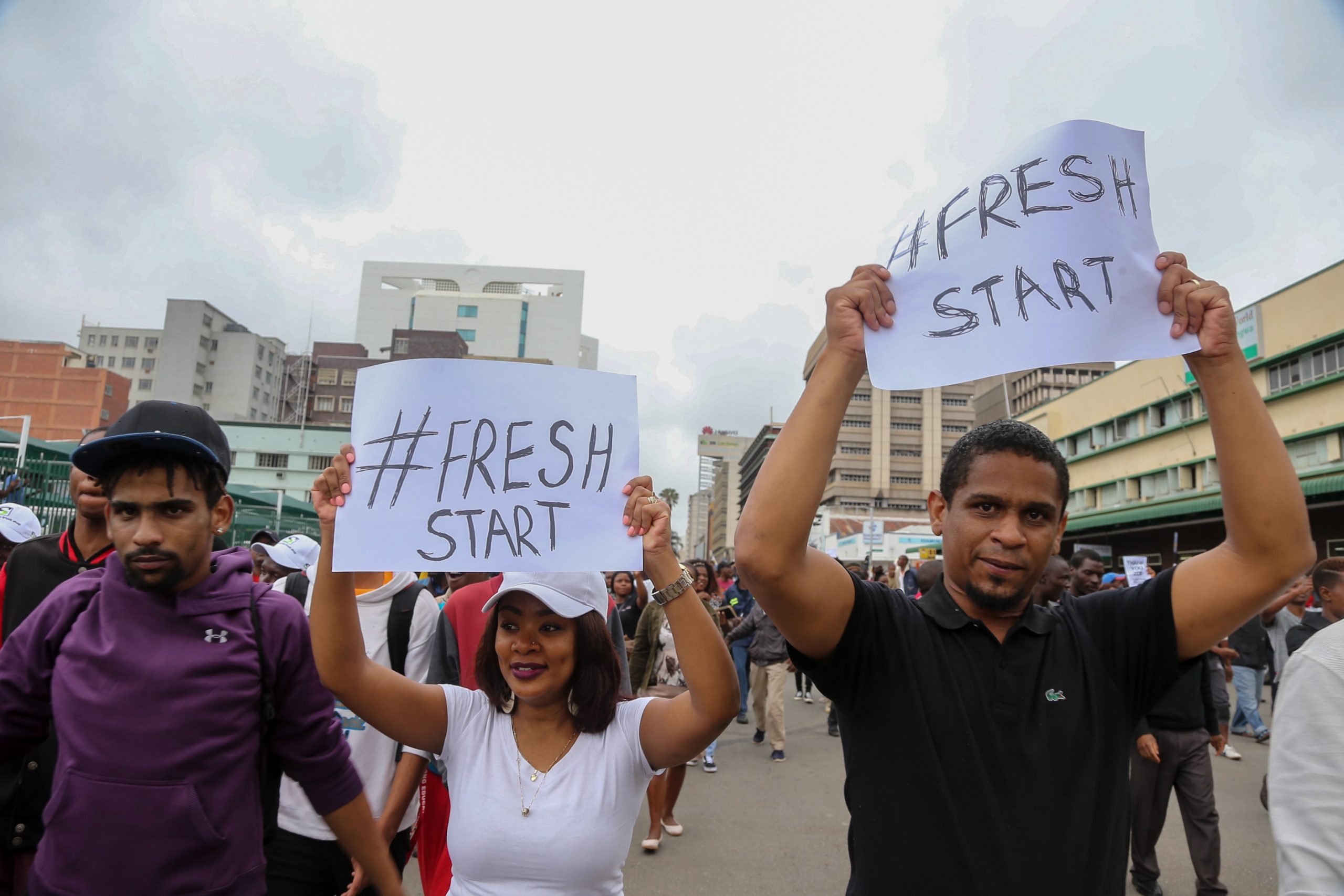 Decolonising human rightsShetty, S. Amnesty International, 2018
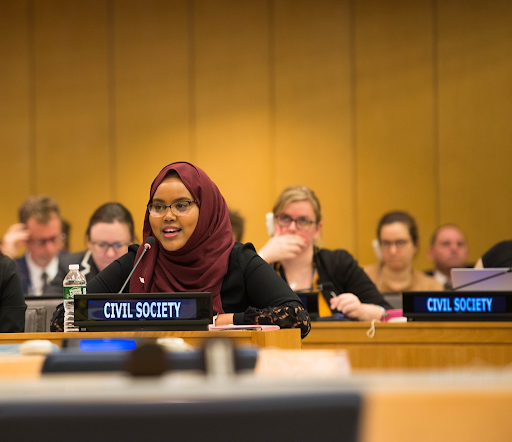 Decolonising human rights discourseLynch, P. and Patel, P. International Service for Human Rights, 2022
.jpg) Decolonization—not western liberals—established human rights on the global agendaJensen, S. L. B. OpenGlobalRights, 2016
Decolonization—not western liberals—established human rights on the global agendaJensen, S. L. B. OpenGlobalRights, 2016 Seventy years of international human rightsHoward-Hassmann, R. E. The Conversation, 2018
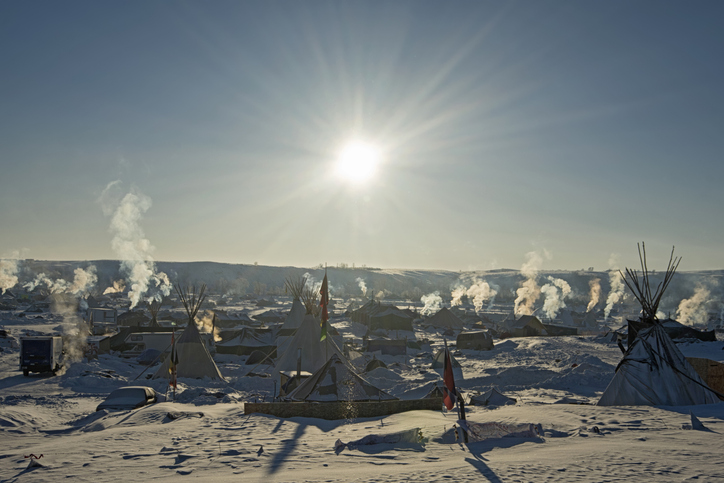 Indigenous human rights claims outline promising new ways of lifeDavis, B. OpenGlobalRights, 2023
- Are Human Rights Really ‘Universal, Inalienable, and Indivisible’?Nasr, L. LSE Human Rights blog, 2016
 When Rights and Cultures CollideMusalo, K. Issues in Ethics, 1997
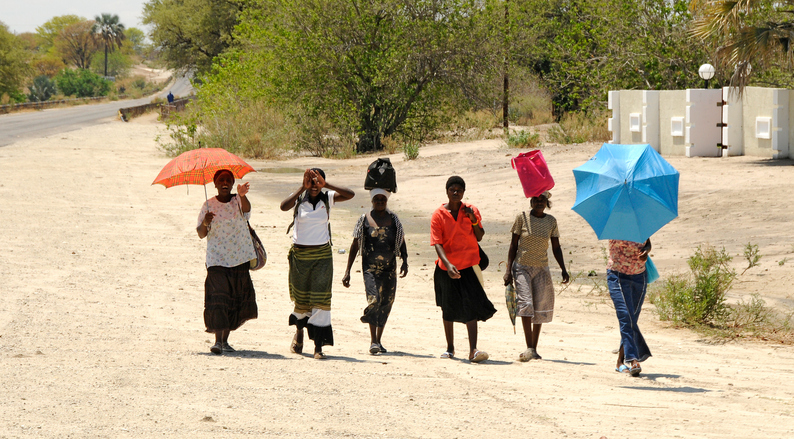 Decolonizing the narrative around constitutions, personal laws, and women’s rightsNabaneh, S., Inglis, S. and Waldorf, L. OpenGlobalRights, 2023
 Inequality and Human RightsYoung, K. Inference, 2019
 The Future of Human Rights BlogRodríguez-Garavito, C. OpenGlobalRights
 The case against human rightsPosner, E. The Guardian, 2014
Educational Resources
 Universal Declaration of Human RightsUnited Nations General Assembly, 1945
- International Convention on the Elimination of All Forms of Racial DiscriminationUnited Nations General Assembly, 1965
- International Covenant on Civil and Political RightsUnited Nations General Assembly, 1966
- International Covenant on Economic, Social and Cultural RightsUnited Nations General Assembly, 1976
- Convention against Torture and Other Cruel, Inhuman or Degrading Treatment or PunishmentUnited Nations General Assembly, 1984
- Declaration on the Right of Peoples to PeaceUnited Nations General Assembly, 1984
- Rome Statute of the International Criminal CourtUnited Nations, 1998
- Declaration On The Rights Of Indigenous PeoplesUnited Nations General Assembly, 2007
- Key concepts on ESCRs - Are economic, social and cultural rights fundamentally different from civil and political rights?Office of the United Nations High Commissioner for Human Rights
- The Right to Development at a glanceOffice of the United Nations High Commissioner for Human Rights
 Advancing the Right to a Healthy EnvironmentUnited Nations Environment Programme
Lectures & Debates
 The Limits of Individual Human RightsAumeeruddy-Cziffra, S. TEDx Talks, 2022
 What are the universal human rights?Berti, B. TED-Ed, 2015
 The Judicialization of the Right to Health in BrazilBiehl, J. Yale University, 2019
- Debate on Human RightsNew York University, 2014
 Human Rights and International RelationsInstitute of Politics Harvard Kennedy School, 2021
 Human Rights in U.S. Foreign Policy: The Unalienable Rights CommissionInstitute for Human Ecology, 2020
- Inequality and Human Rights ConferenceRapoport Center for Human Rights and Justice, 2016
 Is the Human Rights Movement in Crisis?Open Society Foundations, 2018
 Croesus' World: Human Rights in the Age of InequalityMoyn, S. Rapoport Center for Human Rights and Justice, 2015
 Human rights vs. CapitalismNowak, M. Digi24, 2017
 Amnesty International's Salil Shetty on Decolonising Human RightsShetty, S. LSE Law School, 2018
 The Effectiveness of the International Human Rights RegimeThe Jerusalem Center, 2008
 Trade vs Human Rights: Should atrocities prevent foreign business deals?Roundtable,
 Privatization, Human Rights, Media, EU Negotiations & CapitalismVaroufakis, Y. acTVism Munich, 2016
About the author: Rhoda E. Howard-Hassmann, Wilfrid Laurier University
Rhoda Howard-Hassmann is Professor Emerita at Wilfrid Laurier University, Canada, where from 2003 to 2016 she held the Canada Research Chair in International Human Rights. Before that she taught in the Sociology Department at McMaster University, Canada for 27 years. She is the author or co-editor of twelve books, including most recently In Defense of International Human Rights (2018), State Food Crimes (2016), and The Human Right to Citizenship (2015). She has also published on such topics as women’s rights, gay and lesbian rights, multiculturalism, development (especially in Africa), economic and social rights, political apologies, and reparations (to Africa). She has won several academic awards for her work on international human rights, and is both a Member of the Order of Canada and a Fellow of the Royal Society of Canada.