Ethics and Practices of Humanitarian Intervention
Through the use of "humanitarian intervention", states use military force to solve humanitarian crises in other states without their consent. This starkly contrasts with standard humanitarian aid, in which organisations offer their assistance in a lawful and controlled manner within the framework of international law. There has been much discussion surrounding the ethical implications of humanitarian action, specifically regarding humanitarian intervention, which pits the principle of protecting human rights against the principle of non-intervention in state sovereignty.
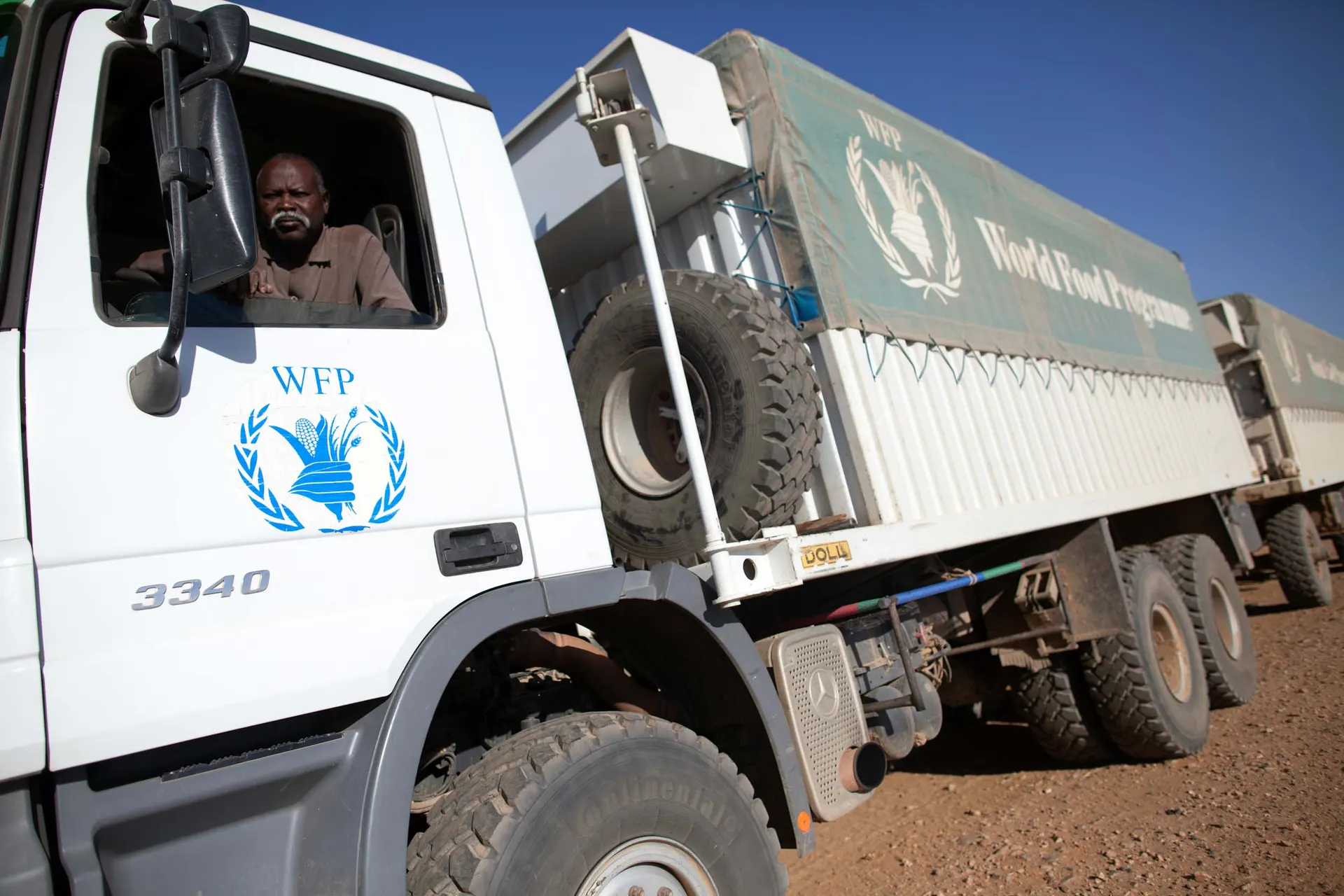
World Food Programme/Flikr
- Published
- Last updated
- Humanitarian action and humanitarian intervention are different in many ways.
- The UN has a special responsibility to help people affected by war and disaster.
- Humanitarian advocacy and multi-party dialogue are particularly important amid the chaos of war and disaster.
Subtopics
Learn more
Subtopic 1
The Politics of Humanitarian Intervention
Updated 6 October 2026 · US Department of Defense/Flikr
- Through the use of "humanitarian intervention", states use military force to solve humanitarian crises in other states without their consent. This starkly contrasts with standard humanitarian aid, in which organisations offer their assistance in a lawful and controlled manner within the framework of
Humanitarian Action and Humanitarian Intervention
Humanitarian action refers to activities conducted by impartial humanitarian organisations like international NGOs, UN agencies, etc. Their goal is to save lives, alleviate suffering, and maintain human dignity during crises, based on the three key principles of neutrality, independence, and impartiality.
For example, Doctors Without Borders, the International Committee of the Red Cross, and Action Against Hunger all provide emergency relief following natural disasters, epidemics, and conflicts. Their activities include disaster response, healthcare, food/water distribution, providing shelter, education and more.
Importantly, their funding comes from voluntary donations and must not be tied to any political agenda to be considered humanitarian. In reality, however, retaining full independence from donor political interests and agendas can be challenging. Most organisations aim to use funds impartially, but the risk of politicisation[1] remains an issue of concern in the sector.
An entire body of philosophical debate is dedicated to the question of whether moral values are universal or indeed subject to "moral relativism". See Harman, G. and Thomson, J. J. (1996) Moral relativism and moral objectivity. ; Gowans, C. (2004) Moral relativism. ; Enke, B., Rodríguez-Padilla, R. and Zimmermann, F. (2023) Moral universalism and the structure of ideology. The Review of Economic Studies, 90(4), 1934-1962.
Humanitarian intervention refers to the use of military force by states to address a humanitarian crisis in another state, without its consent. It is thus an illegal act whose legitimacy relies on moral considerations. It is thus understandably prone to criticism[2] , since there are consistent debates about the universality of moral values, and this legitimacy has been in direct confrontation with other principles considered legitimate, especially that of non-intervention.
While both humanitarian action and intervention aim to help victims, they differ significantly in the actors involved, activities, guiding principles and legal status. The neutrality of humanitarian aid is contrasted with the political nature of state interventions, and constitutes the main breaking point between the two.
The Ethics of Humanitarian Intervention
The principles and practices of humanitarian intervention have long been the subject of debate. The controversy centres on whether it is appropriate for a state or group of states to use military force against another state in order to prevent or stop human rights abuses.
This issue is particularly contentious because it pits the humanitarian impulse to protect vulnerable populations against the principle of non-intervention in the internal affairs of other states. The key question is: can any forceful (military) intervention in the affairs of an independent country by another country be justified on humanitarian grounds? If so, when and by whom should such intervention be carried out?
According to Article 2.4 of the Charter, the principle of non-intervention includes, but is not limited to, the prohibition of the threat or use of force against the territorial integrity or political independence of any state.
The principle of non-intervention is a cornerstone of international law. It is enshrined in the United Nations Charter, which states that "nothing contained in the present Charter shall authorise the United Nations to intervene in matters which are essentially within the domestic jurisdiction of any state". Non-intervention implies that states have the right to govern themselves without interference from other states. Its purpose is to prevent war and maintain international stability.
However, the principle of non-intervention has been challenged in recent years by the rise of humanitarian intervention. Humanitarian intervention is defined[3] as the use of military force by a state or group of states to protect people within another state from gross and systematic violations of human rights. Humanitarian intervention aims to prevent or put an end to atrocities like ethnic cleansing, genocide, and crimes against humanity.
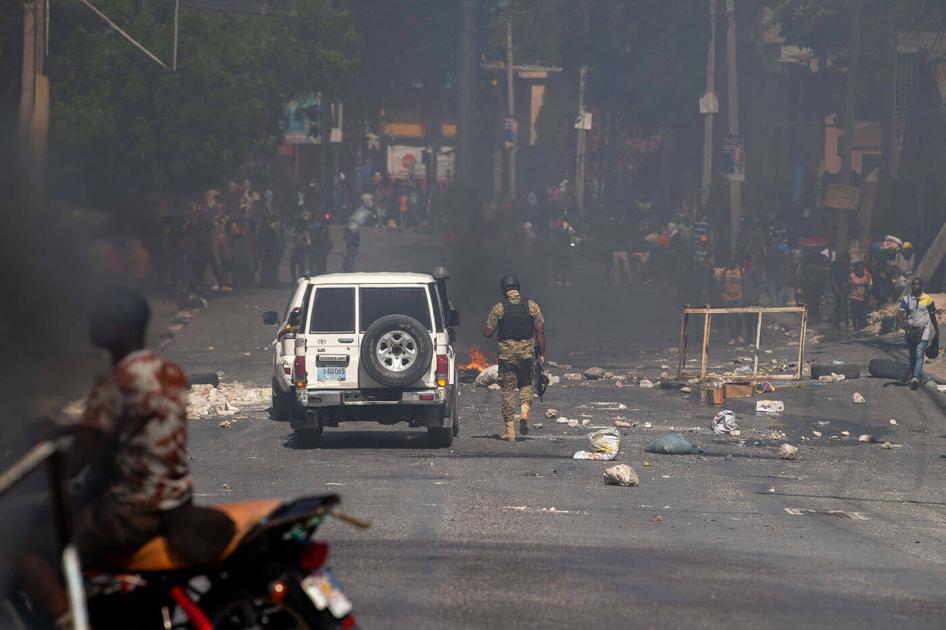
Examples of intervention include Somalia, Haiti, Bosnia, Kosovo, East Timor, Sierra Leone, or the Democratic Republic of Congo.
Those who support humanitarian intervention argue that the international community has a moral obligation to protect people subjected to gross and systematic violations of human rights, even if that protection requires the use of military force. In this regard, they argue that the principle of non-intervention should not be absolute. According to them, in specific situations, the international community should be able to take action to prevent or stop atrocities.
Opponents of humanitarian intervention, on the other hand, argue[4] that non-intervention is a fundamental principle of international law that should not be violated. They believe that the use of force against another state without its consent violates the principles of state sovereignty and territorial integrity. These critics argue human security is better served through peaceful diplomacy and continuous development rather than military imposition, which can have unwanted side effects. They also claim that humanitarian intervention can be used as a pretext for powerful states to intervene in the affairs of weaker states for their own strategic interests.
One example is the NATO intervention in Kosovo in 1999. In the late 1990s, the Federal Republic of Yugoslavia (FRY), led by President Slobodan Milosevic, engaged in a brutal conflict with ethnic Albanians in the province of Kosovo. The conflict led to a humanitarian crisis, with widespread human rights abuses and war crimes, including forced displacement, massacres, and systematic violence against the civilian population.
By 1999, over 800,000 people had been internally displaced and thousands killed[5] in the escalating violence. NATO claimed it had an obligation to intervene to protect Kosovo's civilian population from further atrocities and restore stability. However, some critics believed NATO’s intervention was motivated by geopolitical calculations and the pursuit of strategic interests by its member states. They argued[6] that NATO's real intention was not only to protect human lives and uphold international standards, but also to expand its influence in the Balkans. Other critics believed that the intervention was launched, in part, to prevent a potential refugee crisis that could spill over into neighbouring countries.
The issue of humanitarian intervention is further complicated by the challenge of judging whether the use of force is “justified” or “appropriate”. There are no clear or universally agreed criteria for determining when a situation constitutes a humanitarian crisis that requires intervention. This dilemma has given rise to a number of debates, some more contentious than the NATO intervention in Yugoslavia. For example, the US-led invasion of Iraq, which did not obtain UN Security Council approval, comes readily to mind.