


Middle East & North Africa
A Comprehensive Portrait

0% entries published.

Join usto help complete it!

Introduction:

The Middle East and North Africa (MENA) region predominantly comprises Arab-speaking and Muslim-majority countries that share broad historical, political, and demographic characteristics, while also reflecting considerable internal diversity. The region encompasses a range of political systems, including monarchies, republics, and hybrid or formally democratic structures. Despite these institutional differences, many states have experienced comparable trajectories of state formation, governance centralization, and socio-economic development.

Since 2011, the region has been significantly shaped by waves of political mobilization and upheaval, often referred to as the Arab uprisings, which challenged established political orders and prompted varying degrees of reform, conflict, or regime consolidation. Although the majority of countries in the region are Muslim-majority, MENA is characterized by substantial ethnic, linguistic, and sectarian diversity. These plural social compositions continue to influence political dynamics, state–society relations, and processes of reform and transformation across the region.

10+
Ethnic Groups
The region is comprised of more than 10 different groups, with Arabs being the majority. Others who call it home are Berbers, Kurds, Jews, Persians, Turks, and an array of other ethnic and religious minorities.
Source: Council on Foreign Relations
52 789
10%
Level of Freedom
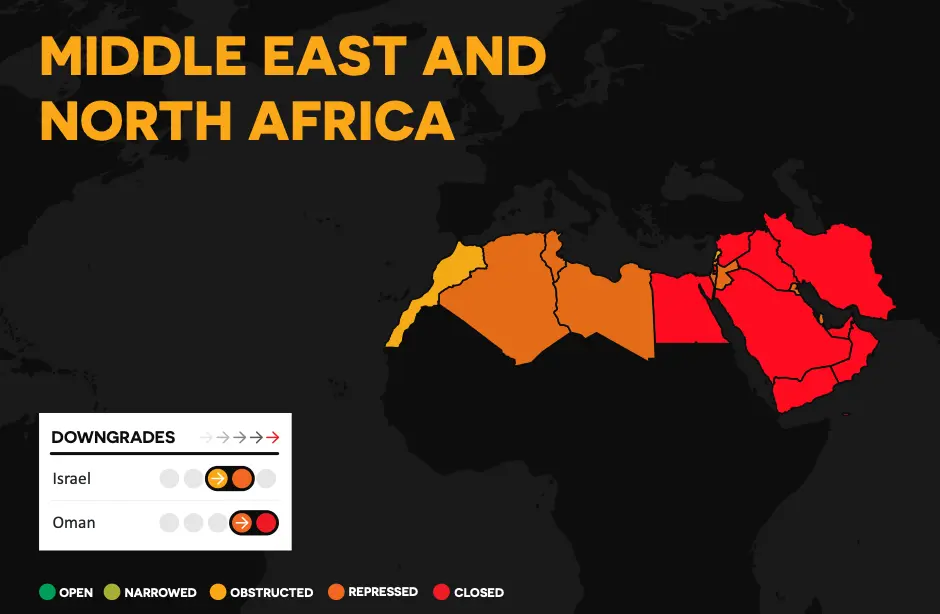
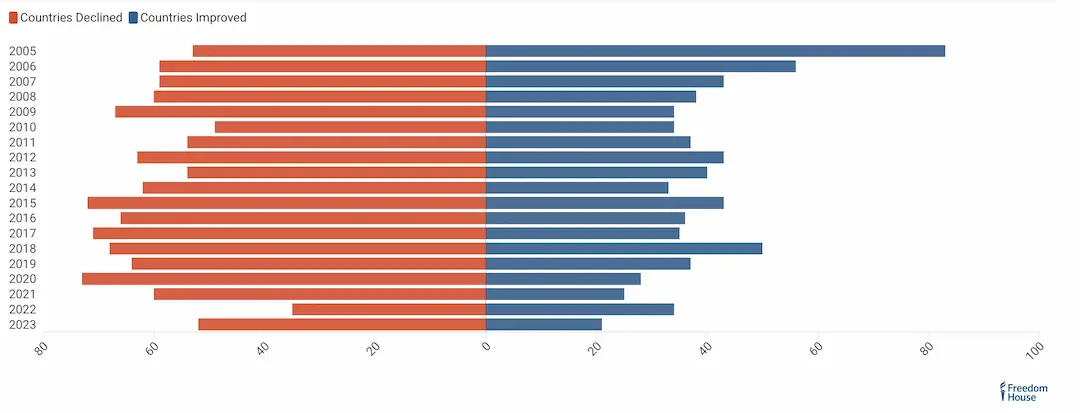
More than 90% of the people in the Middle East live in countries rated 'Not Free' according to a 2024 Freedom House report.
Source: Freedom House
4/10
World's Least Peaceful Countries
The region remains the least peaceful globally, home to four of the ten countries in the world experiencing the most unrest.
Source: Global Finance
24.4%
6.5M
Youth Unemployment
Amount of unemployment in the region for the over 60% of the population who are under 30.
Source: IOM
17.8M
Number of Displaced
The total number of forcibly displaced or stateless people in the region by mid-2025.
Source: UNHCR
34M
14.6M
Child Food Poverty
Approximately 34 million people under five years of age, or three in every five children in the region, experience food poverty.
Source: UNICEF
Click and drag to navigate
TIMELINE

Historical Context of the Region

An overview of the key events.
Swipe to navigate
Fall of the Ottoman Empire and wartime agreements
1924

The Ottoman Empire (1516-1924) lost control over many of its territories in the last few decades before its collapse due to the growing influence of colonial powers. Its attempts to implement a reform plan and regain lost territory in the mid-19th century largely failed, and by World War I, the empire was in full decline. The collapse of the Ottoman Empire had a strong impact on the MENA region, as colonial powers vied for spheres of influence. It would also directly lead to the creation of the state of Israel and the Arab-Israeli conflict.

Entente proposals for the partition of Ottoman territories were settled through several wartime agreements. By the Istanbul Agreements (March–April 1915), Russia was promised Istanbul and the straits, while France was to receive a sphere of influence in Syria and Cilicia. By the Anglo-French Sykes-Picot Agreement (January 3, 1916), France would take direct control of Lebanon and indirect control of Syria, while Britain would control Iraq and the Persian Gulf. Under this agreement, Palestine was also placed under an international regime.

More
Click here to show content
Israeli-Palestinian Conflict - Origins
1880s

The early history of the Israeli-Palestinian conflict can be traced back to the late 19th century, with the immigration of Jews to Palestine, which, back then, had been ruled by the Ottoman Empire. The influx of Jewish immigrants seeking to establish their promised homeland subsequently led to political tensions with the indigenous Arab population. In 1897, the first Zionist Congress was held in the Swiss city of Basel, leading to the adoption of the ‘Basel Program’, which set the Zionist movement's goal as the establishment of a homeland for the Jewish people.

In the early 20th century, the Zionist movement gained momentum when the British government issued the Balfour Declaration in 1917, expressing support for the establishment of a Jewish homeland in Palestine. Following the increasing tensions between the Arab and Jewish populations, mutual attacks and acts of retaliation were carried out, including the 1920 Nebi Musa riots. In 1936, the Arab Higher Committee, led by the Grand Mufti of Jerusalem, Haj Mohammed Amin Al-Husseini launched a general strike on Jewish businesses, which set staged the subsequent Arab revolt from 1936 to 1939.  In 1947, the United Nations General Assembly accepted the proposed Partition Plan, which laid the foundation for the Nakba and the first Arab-Israeli War in May 1948.

No items found.
More
Click here to show content
Creation of the Israeli State and 'Nakba'
1948

The establishment of the State of Israel in 1948 was accompanied by the Nakba (Arabic: “Catastrophe”), which had a devastating impact on all aspects of Palestinian life and society. More than 750,000 Palestinians were expelled from their homeland, and 531 villages were demolished and depopulated. This period also saw numerous massacres against the Palestinian population carried out by right-wing Zionist militias, including Irgun and Lehi, most notably the 1948 Deir Yassin massacre.

Following these events, Palestinians in the Galilee, Naqab, and the Triangle were subjected to Israeli military rule until 1968, after which they became citizens of Israel, while the West Bank came under Jordanian administration and the Gaza Strip fell under Egyptian military control.

No items found.
More
Click here to show content
Discovery of oil and oil exports
1908 - 1962

In the aftermath of World War I, the Arab states of the Gulf were weak, with faltering economies and local rulers who maintained their autonomy only with British assistance. The discovery of oil in the region changed this. Oil was first discovered in Iran in May 1908, and by 1911, the Anglo-Persian Oil Company (APOC) was producing oil there. The British discovered oil in Iraq after World War I. In 1932, Standard Oil Company of California (Socal) also discovered oil in commercial quantities in Bahrain. Socal then obtained a concession in Saudi Arabia in 1933, and by 1938, it had discovered oil in commercial quantities.

A flurry of oil exploration activity occurred in the Gulf in the 1930s, with Britain and the United States vying for oil concessions. Although the oil companies struck large oil deposits in Bahrain almost immediately, it took longer to locate commercial-sized finds in other countries. Oman, for example, was unable to export oil until 1967. The oil fields in Kuwait were developed the fastest, and by 1953, that nation had become the largest oil producer in the Gulf. Significantly, smaller fields in Qatar came onstream in commercial quantities in the 1950s, and Abu Dhabi began to export offshore oil in 1962.

More
Click here to show content
MENA colonies, independence movements and decolonisation
1911 - 1962

During the 20th Century, North Africa experienced decades of European colonisation. Italy controlled Libya from 1911 to 1947, while Spain controlled colonies in parts of modern-day Morocco. France also controlled other parts of Morocco, as well as modern-day Tunisia and Algeria, where hundreds of thousands of French people settled. Libya finally gained independence in 1951 following Italy’s defeat in World War II. Riots and political unrest characterised the postwar era in Tunisia. Under pressure from independence leader Habib Bourguiba and other nationalists, France formally recognised Tunisian independence on March 20, 1956. Bourguiba became the new nation's first leader, and the old puppet regime was abolished in 1957 in favour of a republic. Spain relinquished most territory in 1956 and 1958, after a brief war with Moroccan insurgents. Algeria’s fight, however, was longer and even bloodier. Opposition to French colonisation erupted in 1954 in the Algerian War of Independence, leaving hundreds of thousands dead and millions more displaced. The war ended in 1962, with Algeria becoming independent.

More
Click here to show content
The Pahlavi Dynasty and Coup in Iran
1921 -1953

The Pahlavi dynasty, the former ruling dynasty of Iran, began following a coup d’état against the Qājār dynasty in 1921 and ended with Iran’s Islamic Revolution of 1979. After Mohammad Reza Shah Pahlavi was deposed, Mohammad Mossadeq returned to parliament in 1941. To prevent foreign interests from controlling the Iranian economy, Prime Minister Mohammed Mossadeq nationalised the oil industry. This move was met with fierce resistance, especially from the British, who owned substantial oil interests.

Set against the backdrop of the Cold War, American and British intelligence groups worried that Mossadeq's nationalist aspirations would lead to an eventual communist takeover. To avoid this, U.S. President Dwight Eisenhower approved a joint British-American operation (Operation Ajax) to overthrow Mossadeq. Following the August 1953 coup, Mossadeq was defeated, bringing Mohammed Reza Shah Pahlevi back to power. Mohammad Reza subsequently imposed aggressive economic development policies, including the modernisation program known as the White Revolution. The program, however, upended the country's traditional power structures and heightened tensions that eventually led to Mohammad Reza’s downfall in 1979.

More
Click here to show content
Gulf states declare independence
1961 - 1971

With the exception of Saudi Arabia and Iraq, the Arab coast of the Gulf was ruled by ten families. These families owed their positions to tribal leadership. It was also on this traditional basis that the British negotiated treaties with their leaders in the nineteenth and early twentieth centuries. In the aftermath of World War II, however, Britain was burdened by the sacrifices it had made during the war and could not be as globally involved as it had been before.

Kuwait was the first state to terminate the agreement with Britain and to declare independence in 1961. Oil production in Kuwait had developed more quickly than in neighbouring states, and as a result, Kuwaitis were better prepared for independence. Qatar and Bahrain achieved independence from British rule in 1971, marking a crucial turning point in their histories. Prior to this, both nations were under British protectorate status, with Qatar governed by the Al Thani tribe and Bahrain by the Al Khalifa dynasty. The movement towards independence was influenced by growing nationalist sentiments, especially after World War II, when local populations became increasingly resentful of foreign control.

More
Click here to show content
Six-Day War
1967

The Six-Day War of 1967 was a turning point in the Arab-Israeli conflict and took place frrom June 5th, until June, 10th. Escalating tensions between Israel and its neighbors, particularly Egypt, Jordan, and Syria, led Israel to launch a military strike. Within six days, Israel had achieved a decisive victory, capturing the Sinai Peninsula, the Gaza Strip, the West Bank, East Jerusalem, and the Golan Heights. The war not only expanded Israel’s territory dramatically but also gave it strategic control over vital water resources.

No items found.
More
Click here to show content
Iranian Revolution
1978 - 1979

The Iranian Revolution (1978-1979) arose from widespread and diverse discontent with Iran's monarchical government. Iranians from the secular left to the religious right came together to bring an end to the shah’s autocracy and Western interference in the country’s policies. The Jaleh Square Massacre took place on 8 September,  when Mohammad Reza Shah's troops fired into a crowd of 20,000 pro-Khomeini protestors in Tehran. The day became known in Iran as 'Black Friday', and led to greater discontent with the government.
 
On 10 and 11 December, hundreds of thousands of people participated in anti-regime marches across the country, leading to violent clashes between protesters and the Shah's troops. After Mohammad Reza Shah fled Iran on 16 January, Khomeini called for a 'street referendum' on the monarchy. By Khomeini's proclamation, Mehdi Bazargan became the first prime minister of the revolutionary regime in February 1979. In his attempts to Islamise Iran, Khomeini established various institutions, including the Islamic Revolutionary Guard Corps, a military force loyal to the clerical leaders. On 1 April, Khomeini declared the establishment of the Islamic Republic of Iran.

More
Click here to show content
Israel-Egypt Peace Agreement
1979

After five wars over three decades, Egypt and Israel signed a peace agreement in March 1979. Cairo and Jerusalem had clear motivations to choose peace over conflict. Egypt wanted to restore its sovereignty over the Sinai Peninsula, which it lost in the 1967 Six-Day War. Israel also wanted to secure its southern border and neutralise the region’s largest and most powerful Arab country.

A second agreement, “The Framework for Peace in the Middle East called for a process through which a “self-governing authority in the West Bank and Gaza” would be elected by the inhabitants of these territories, in a process agreed upon through negotiations between Egypt, Israel, and Jordan. The Palestinian Liberation Organisation rejected the agreement, arguing that ‘accepting the five-year “transitional period” without having the future of the occupied territories specified after the five-year period bestowed legitimacy upon the occupation and gave Israel time to establish further settlements in the West Bank and Gaza.’

More
Click here to show content
First Intifada
1987

The First Intifada erupted in December 1987, beginning in the Jabalia refugee camp in Gaza, following a traffic incident that killed four Palestinian workers during a collision with an Israeli truck. The event subsequently resulted in widespread demonstrations that further spread throughout Gaza, the West Bank and East Jerusalem.

No items found.
More
Click here to show content
Persian Gulf War
1990 - 1991

The Persian Gulf War (1990–91) was triggered when Iraq’s leader, Saddam Hussein, ordered the invasion and occupation of Kuwait on August 2, 1990. The apparent aims included cancelling a large debt Iraq owed Kuwait, acquiring that nation’s large oil reserves and expanding Iraqi power in the region. It was the first significant international crisis of the post-Cold War era, and the U.S.-led response would set important precedents for the use of military force over subsequent decades. Active resistance to the invasion lasted about 14 hours, during which time an estimated 4,200 Kuwaitis were killed in combat. As many as 350,000 Kuwaiti refugees also fled south into Saudi Arabia. Iraq was ultimately defeated due to a range of factors, including the overall ineffectiveness of Iraq's chemical weapons.  Another factor was Iraq's strategic isolation as Saddam faced a strong U.S.-led coalition that included most major Arab powers.

More
Click here to show content
Oslo Accords
1993 - 1995

The Oslo Accords are a set of agreements between Israel and the Palestine Liberation Organization (PLO) that established a peace process for the Israeli-Palestinian conflict based on a two-state solution. The Oslo I Agreement of 1993 established a ‘Palestinian interim Self-Governing Authority,’ setting up a framework for the Palestinians to govern themselves in the West Bank and Gaza. In 1995, the Oslo II Agreement established the PLO-based Palestinian Authority (PA) in Gaza and Jericho.

The Oslo process faced recurring obstacles. Firstly, the assassination of Israeli Prime Minister Yitzhak Rabin in 1996 resulted in the rise of Benjamin Netanyahu, an outspoken critic of the Oslo Accords. Although the process resumed in 1998 under the new prime minister, Ehud Barak, tension had already been increasing. The Palestinians were aggrieved that they were still deprived of self-governance after the proposed timeline of five years. The Israelis were also increasingly suspicious of the PLO’s ability to prevent attacks.

More
Click here to show content
Second Intifada
2000 - 2004

On September 28, 2000, Israeli politician Ariel Sharon visited the Israeli-occupied areas of East Jerusalem, sparking the second intifada. Palestinian leaders saw this visit as Israel laying claim to the occupied territories as well as Islam's holy sites at Jerusalem's Temple Mount. Sharon’s election as Israel’s prime minister also sparked resentment, linked to the breakdown of the Camp David peace talks in July 2000. The second mass uprising saw Hamas and other jihadist groups shell Israeli towns and fight gunbattles with Israeli soldiers. In response, Israel launched airstrikes against targets in Gaza and large-scale military attacks in the occupied territories. Although the second intifada has no clearly defined end date, some observers point to the death of Yasser Arafat in November 2004 as the decisive moment. However, lethal attacks continued for months after his death.

More
Click here to show content
9/11 and War in Afghanistan
2001 - 2021

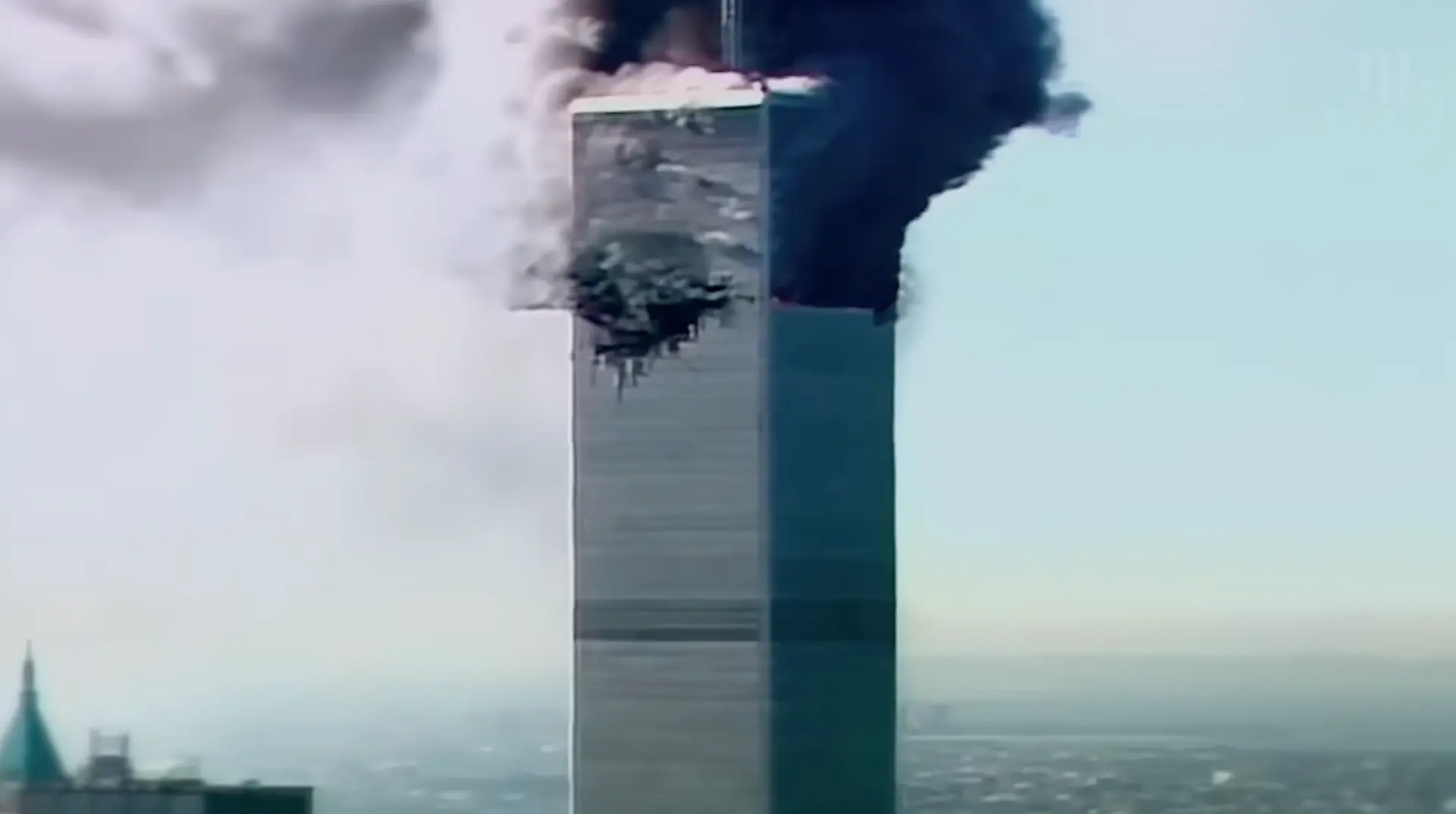
Following 9/11, US President George W. Bush announced a global ‘War on Terror.’ The Afghanistan War consisted of three phases. The first phase involved toppling the Taliban-led government of Afghanistan, which Bush accused of hosting Osama Bin Laden and Al Qaeda. The second phase, from 2002 until 2008, was marked by a U.S. strategy of defeating the Taliban militarily and rebuilding core institutions of the Afghan state. The third phase, a turn to counterinsurgency, began in 2008 and accelerated with U.S. Pres. Barack Obama’s 2009 decision to temporarily increase the U.S. troop presence in Afghanistan.

Various factors ultimately contributed to the Taliban’s reconquest of Afghanistan in August 2021, following twenty years of conflict. Firstly, the international military presence, with its large number of contractors, fuelled corruption. Warlords were also politically and financially empowered. Likewise, the international intervention in Afghanistan lacked local-level ownership and accountability. This lack of accountability further undermined the belief that the newly created order was a true advocate of the rule of law and human rights.

More
Click here to show content
Iraq War
2003 - 2011

In 2002, the new U.S. president, George W. Bush, argued that the vulnerability of the United States following the September 11 attacks of 2001, together with Iraq’s alleged continued possession and manufacture of weapons of mass destruction (an accusation that was later proved wrong), made disarming Iraq a priority.

The Iraq War, also referred to as the Second Gulf War, began in March 2003 when the United States led a coalition to invade Iraq. Despite the quick toppling of Hussein's regime, the aftermath led to an insurgency, fuelled by sectarian violence between Shia and Sunni groups as well as resistance to foreign intervention. As the conflict evolved, significant incidents, such as the Abu Ghraib scandal, fuelled public scrutiny of the war’s justification and execution. The U.S. military ultimately withdrew from Iraq in December 2011, leaving behind a nation still grappling with political and cultural challenges.

More
Click here to show content
Authoritarianism and the Arab Spring
2010 – 2011

The Arab Spring resulted in a wave of pro-democracy uprisings and protests across the Middle East and North Africa from 2010 to 2011. People rose up to protest against authoritarianism, poverty and corruption, challenging some of the region’s authoritarian regimes. The initial protests in Tunisia and Egypt toppled their regimes, inspiring similar attempts in other Arab countries. The Libyan uprising turned into a civil war with French, American and British air forces intervening against Muammar Gaddafi. On October 20, 2011, Gaddafi was captured and killed in his home region of Sirte by rebels. In Syria, the torture of youths sparked mainly peaceful protests at first, and calls for democratic reform. However, the revolt escalated into a civil war due to violent government repression.

More
Click here to show content
Revolts and anti-government protests – Algeria, Sudan, Iraq, Lebanon
2019

In 2019, a renewed wave of mass protests swept parts of the Arab world, driven by popular frustration with corruption, economic hardship, and maladministration. In Iraq, the October  protests, known as the Tishreen Revolution, were largely led by young Iraqis opposing corruption, nepotism, and the sectarian-based Muhasasa system. Sustained demonstrations and violent repression underscored deep public disaffection and ultimately forced Prime Minister Adil Abdul-Mahdi to resign.

Similar dynamics unfolded in Algeria and Lebanon. Algeria’s Hirak movement erupted in February 2019 in response to President Abdelaziz Bouteflika’s bid for a fifth term, quickly evolving into a nationwide call for systemic political reform. While the protests succeeded in removing Bouteflika, they failed to dismantle le pouvoir, the entrenched military–political elite, and faced internal debates over leadership and representation. In Lebanon, the October 17 protest, sparked by new taxes, including a proposed levy on WhatsApp calls, rapidly became the largest cross-sectarian mobilization since the civil war, forcing Prime Minister Saad Hariri to resign.

More
Click here to show content
Hamas attack Israel and Israel’s War on Gaza and War on Lebanon
2023 - 2025

On October 7, 2023, Hamas launched a large-scale attack on Israel, triggering what would become a two-year campaign of genocide against the Palestinian population in the Gaza Strip and marking the deadliest and most destructive phase of the long-standing Israeli–Palestinian conflict. By early 2025, nearly 90 percent of Gaza’s population had been displaced amid severe humanitarian crises and the widespread destruction of civilian infrastructure. A first major, albeit short-lived, ceasefire was declared on January 19, 2025, following international mediation, even as Israel continued targeting civilians in Gaza. The genocide also projected a similar peak in violence, killings, and arbitrary arrests in the West Bank.

The conflict sparked a dangerous regional escalation, particularly along Israel’s northern border with Lebanon. Beginning on October 8, 2023, clashes between Israel and Hezbollah intensified. What initially began as limited cross-border exchanges escalated into sustained confrontations involving airstrikes, rocket fire, and artillery bombardments across southern Lebanon, northern Israel, and parts of Syria. This represented one of the most severe escalations in over a decade and ultimately culminated in the assassination of Hezbollah’s former secretary-general, Hassan Nasrallah, in Beirut on September 27, 2014.

More
Click here to show content
Iran Protests
December 2025 - January 2026

Nationwide protests began in Iran on 28 December 2025 in response to severe economic conditions, including record inflation and currency collapse. In addition to internet shutdowns across Iran at the beginning of January, there were disruptions to mobile networks and GPS interference. Within weeks, the protests were suppressed following a brutal crackdown that began on 9 January. Thousands of protesters were killed during this protest, some of whom government officials characterised as “foreign agents” and “terrorists.”

More
Click here to show content
Iran War
2026

On February 28, 2026, the United States and Israel launched a joint military operation against Iran, resulting in the killing of Supreme Leader Ali Khamenei. In the first days of airstrikes, the two nations also killed several top leaders of the Iranian military and the Islamic Revolutionary Guards Corps (IRGC).

The Iran War has triggered hundreds of retaliatory missiles and thousands of drones from Iran across the region. The attacks have had a serious impact, leaving more than 2,000 people dead in Iran, Lebanon, and Israel and hundreds of thousands of people displaced in Lebanon. Iranian attacks have also targeted commercial hubs in neighbouring countries that aid the U.S. military as well as oil infrastructure in the region, including vessels in the Strait of Hormuz, through which 20 per cent of the world’s oil passes.

More
Click here to show content
Our Entries

History of the Arab World

Understand the historical background of the region, its conflicts and its ongoing developments.
2 Entries

Political System

Explore how the conflicts are reflected in the politics of MENA and the global level.
1 Entry

Region in the International Relations

Explore how the conflicts are reflected in the politics of MENA and the global level.
3 Entries
Maps & charts

Visualising the Region

Public opinions on democracy:
Source: Arab Barometer Wave VIII., 2023-2024
Lorem ipsum dolor sit amet, consectetur adipiscing elit. Fusce at dui at augue volutpat sagittis. Etiam non urna rhoncus, dignissim quam a, euismod quam.
Data analysis and visualization: Kelly Kiki/iMEdD,
based on data published by resourcetrade.earth/Chatham House
License of use: CC BY-NC 4.0

Learn More from Other Resources

From documentaries to databases and debates, these resources, selected by our team from across the web, will help you understand the war and its full context.

Videos & Documentaries

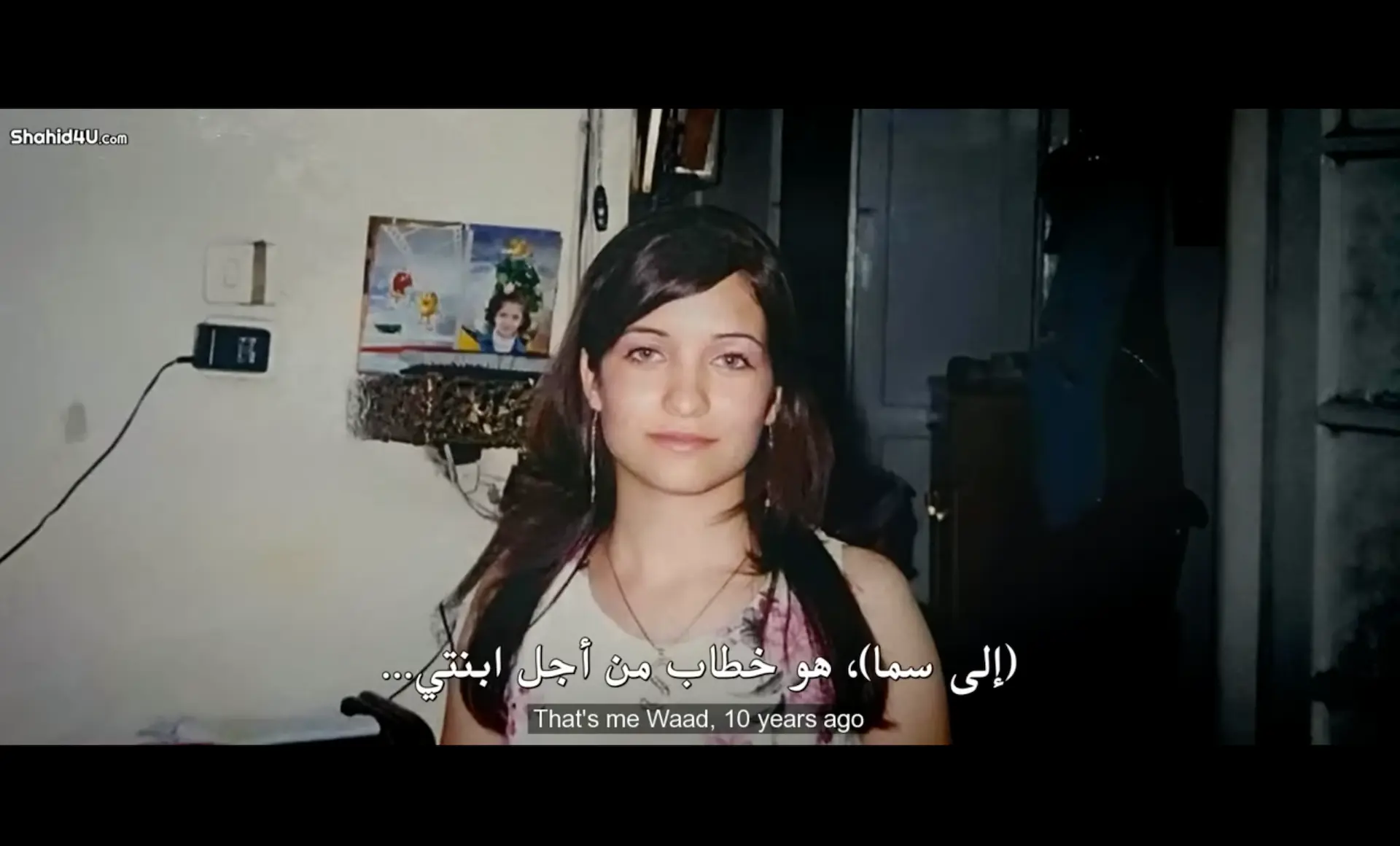
For Sama
Channel 4
A documentary about the life of a syrian

Russia and Ukraine: What Does Putin Want?
Columbia University
A few weeks before the 2022 full-scale invasion of Ukraine, four scholars discuss Putin’s possible goals and western military and diplomatic efforts aimed at defusing this crisis.
The White Helmets
Netflix
As daily airstrikes pound civilian targets in Syria, a group of indomitable first responders risk their lives to rescue victims from the rubble.
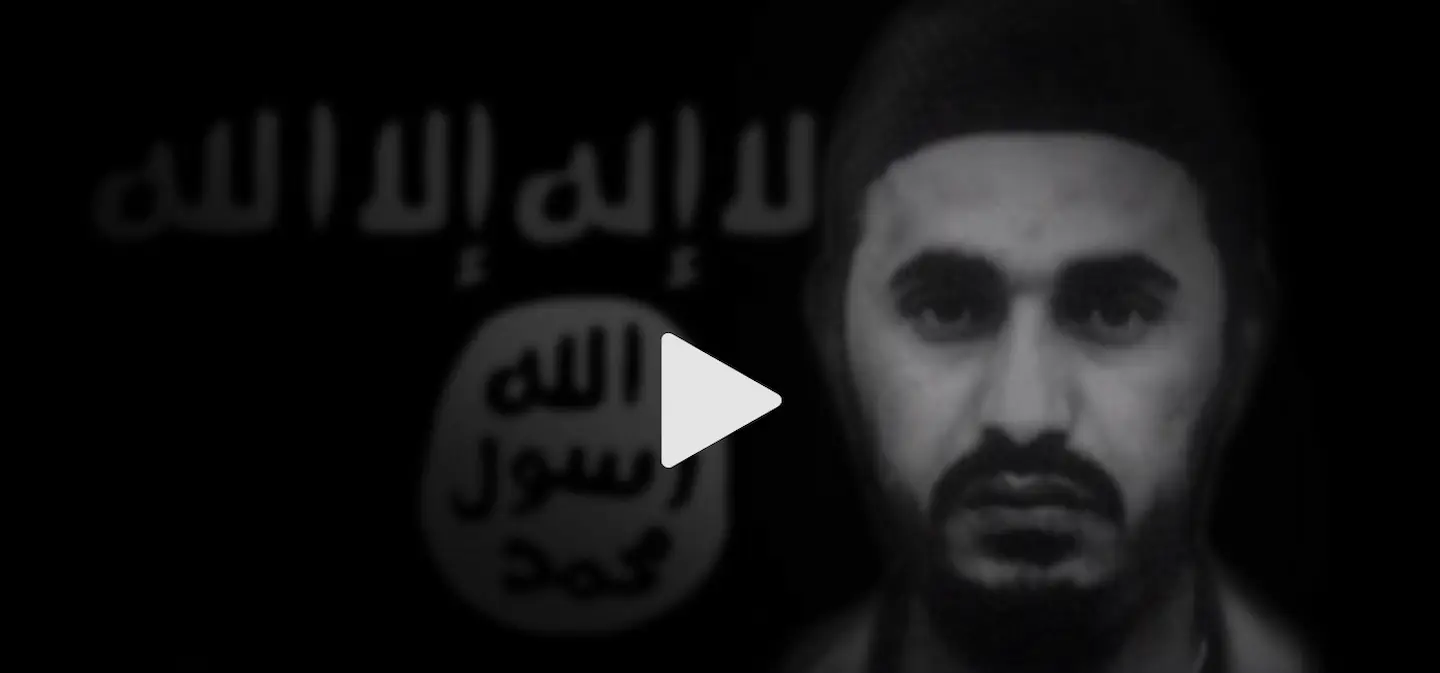
The Secret history of ISIS
Frontline
The Secret History of ISIS investigates how a small band of extremists established what became the world’s most feared terror group.
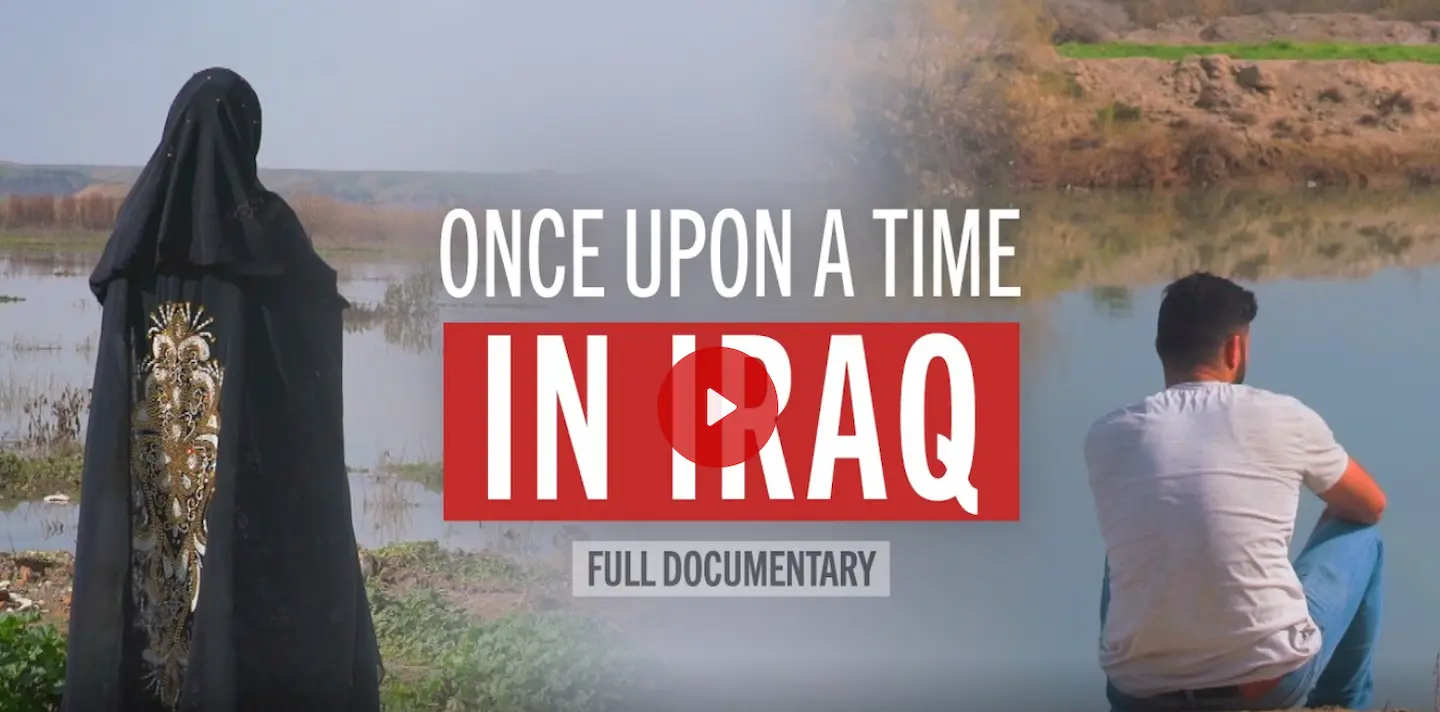
Once Upon a Time in Iraq
PBS
Once Upon a Time in Iraq chronicles the story of the Iraq War from the perspectives of the people who lived through it. It covers events between 2003, when coalition forces occupied the country, and 2014, when the Islamic State group came into existence.
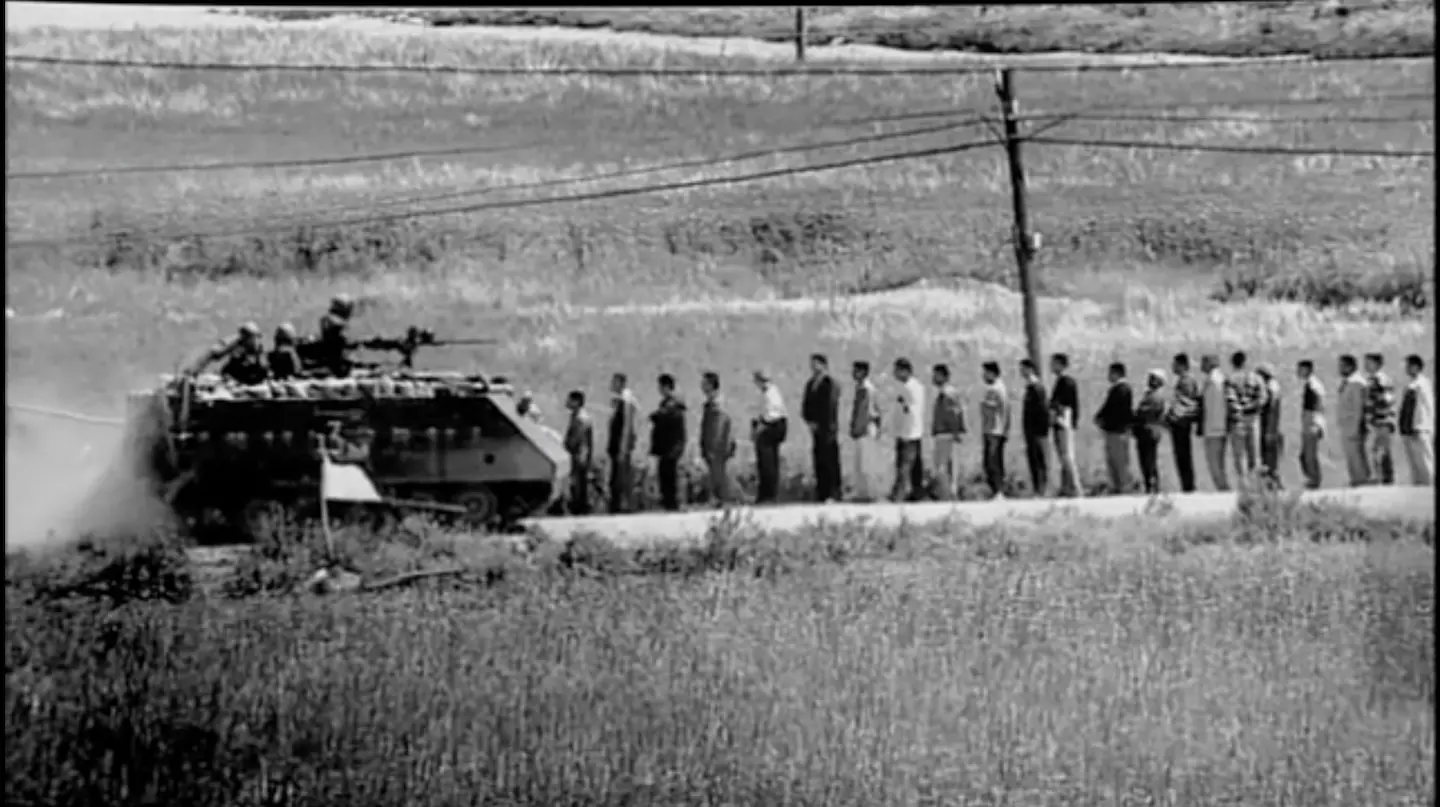
Palestine Is Still the Issue
John Pilger
Palestine Is Still the Issue examines the Israeli–Palestinian conflict to highlight some of the issues that continue to plague the region. It claims that the primary causes of the conflict have remained the same for the past fifty years.
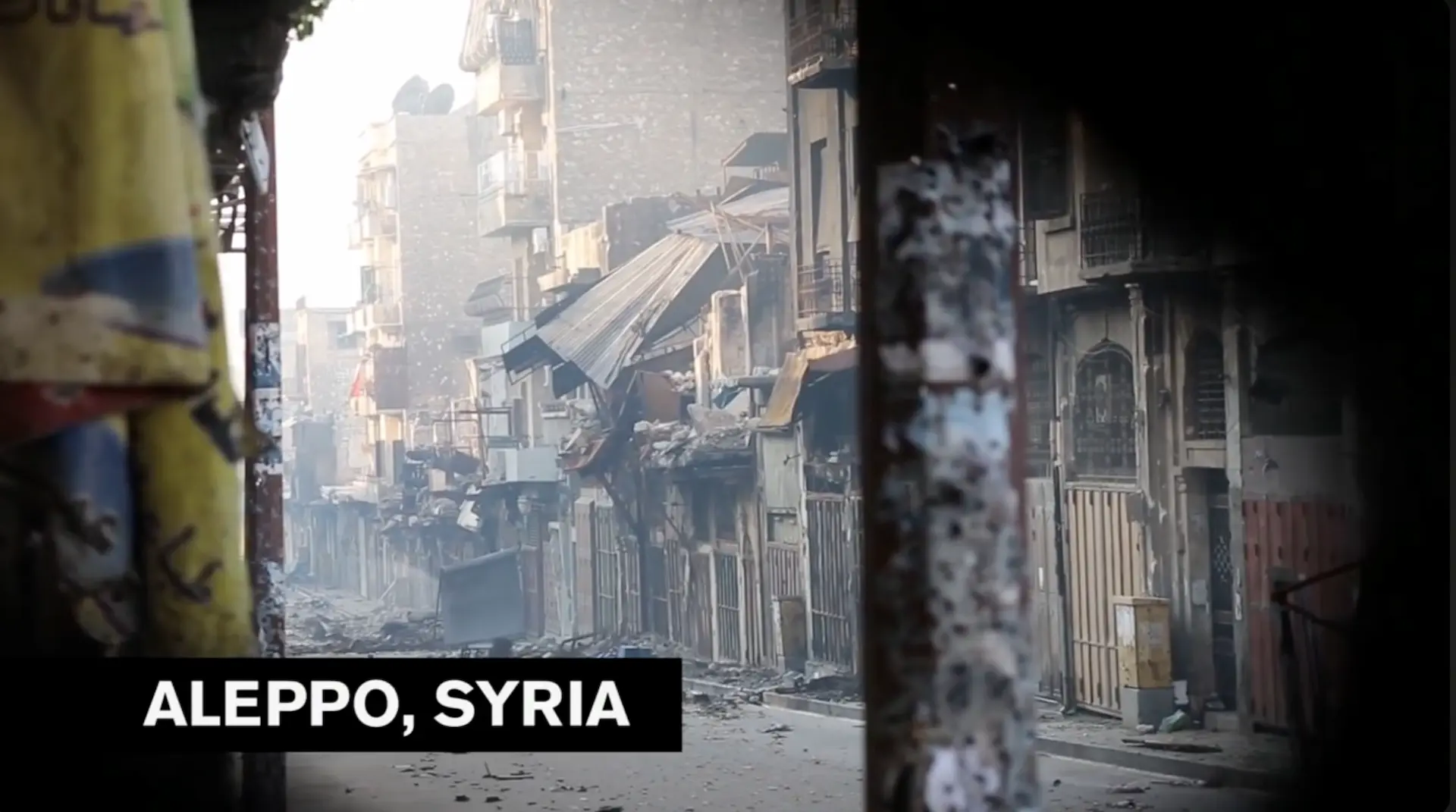
Syria - Not Anymore: A Story of Revolution
Matthew VanDyke
The film tells the story of the Syrian struggle for freedom as experienced by a 32 year old rebel commander, Mowya, and a 24 year old female journalist, Nour Kelze, in Aleppo, Syria.
The Long Road to Tripoli – Part 1
Al Jazeera
The revolution would bring together Libyans from all walks of life. The Long Road to Tripoli is two one-hour documentaries that tell the story of a successful Libyan businessman who left the safety of London to go home, his son who had never before seen war and a property developer who became a revolutionary.
The Long Road to Tripoli – Part 2
Al Jazeera
The second film follows Ibrahim, his father, Abduladim, and fighters from the UK and Libya as they take on Gaddafi’s forces in a battle for the strategic town of Kikla in the Western Mountains. As they meet prominent Libyans in Tunisia who are planning for a post-Gaddafi Libya, the news comes in that the revolution has started in Tripoli. Within days, Gaddafi’s compound is overrun.
Killing Gaza
Behind the Headlines
Killing Gaza is an eye-opening documentary created by two independent journalists, Max Blumenthal and Dan Cohen. The film focuses on the 7 weeks of conflict between Israel and Palestine in 2014. This conflict was one of the deadliest in modern history, and Killing Gaza gives a vivid account of the horrifying events that took place during this time.
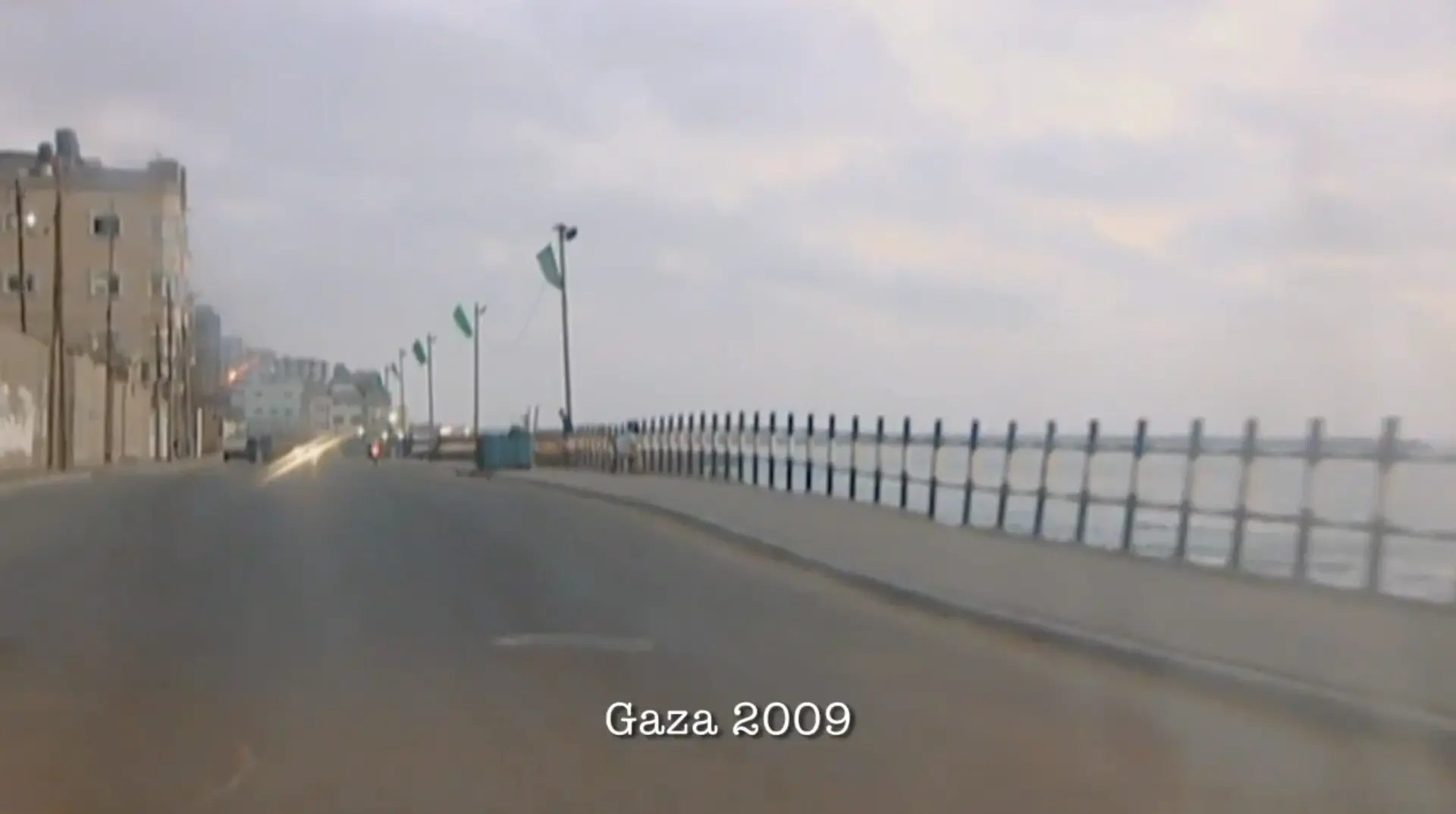
Tears of Gaza
Tour de Force
“Tears of Gaza” is a 2010 anti-war Norwegian documentary concerning the Gaza War from the perspective of Palestinian kids. The director of this film is Vibeke Løkkeberg.
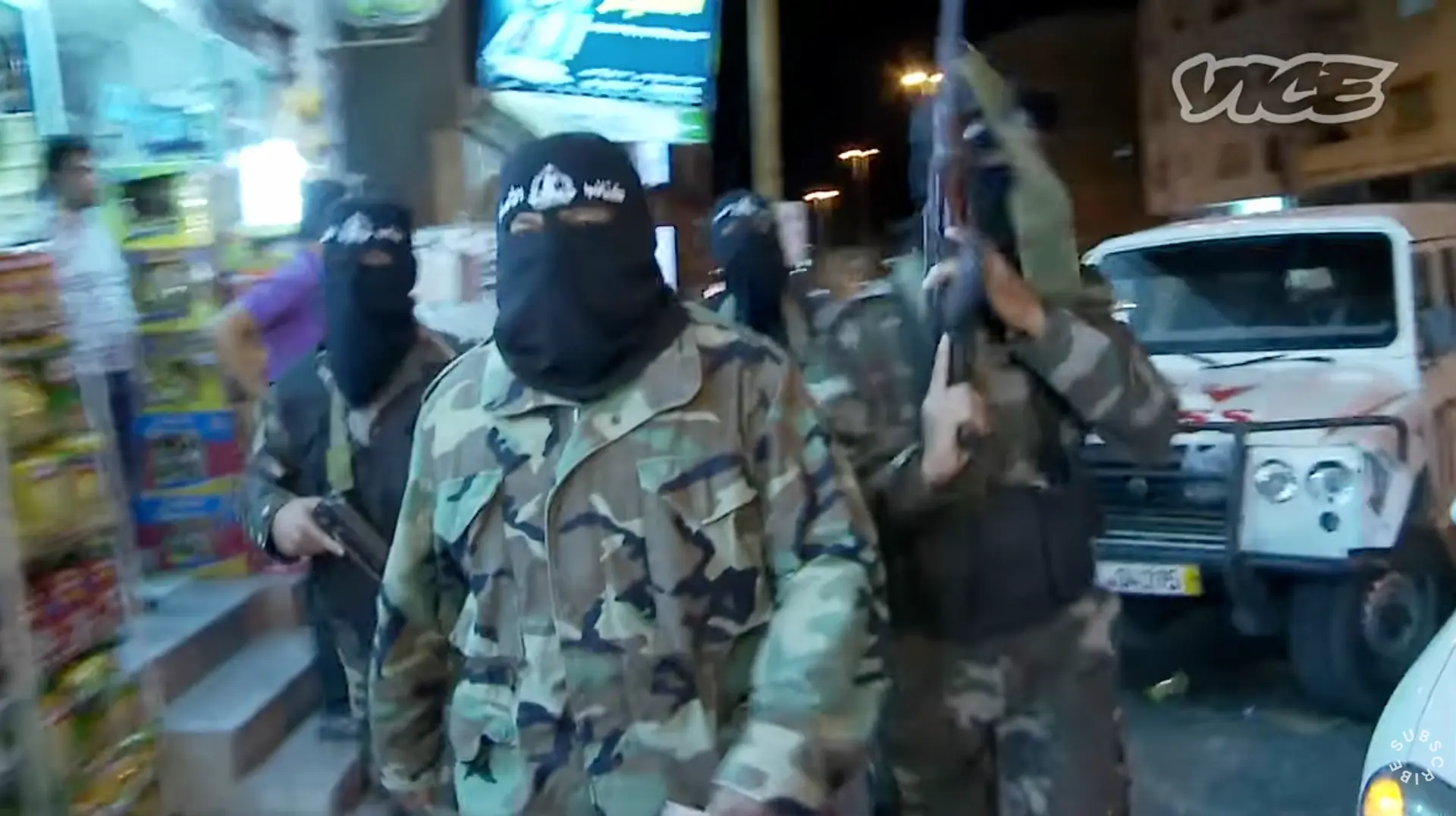
Crime & Punishment in the Gaza Strip
Vice
When the post-Mubarak government of Egypt decided to start letting small numbers of folks into Gaza through their Rafah crossing, the film team knew it was the chance to finally get a rare glimpse of the embattled Gaza Strip and to see what life was like under the rule of Hamas.
Solar Mamas
The Why
Solar Mama is an inspiring documentary about one woman’s journey to bring light into her world. Rafea, a Bedouin mother from the desolate Jordanian desert, is given an opportunity to take part in a program sponsored by the Barefoot College in India that will teach her how to become a solar engineer.
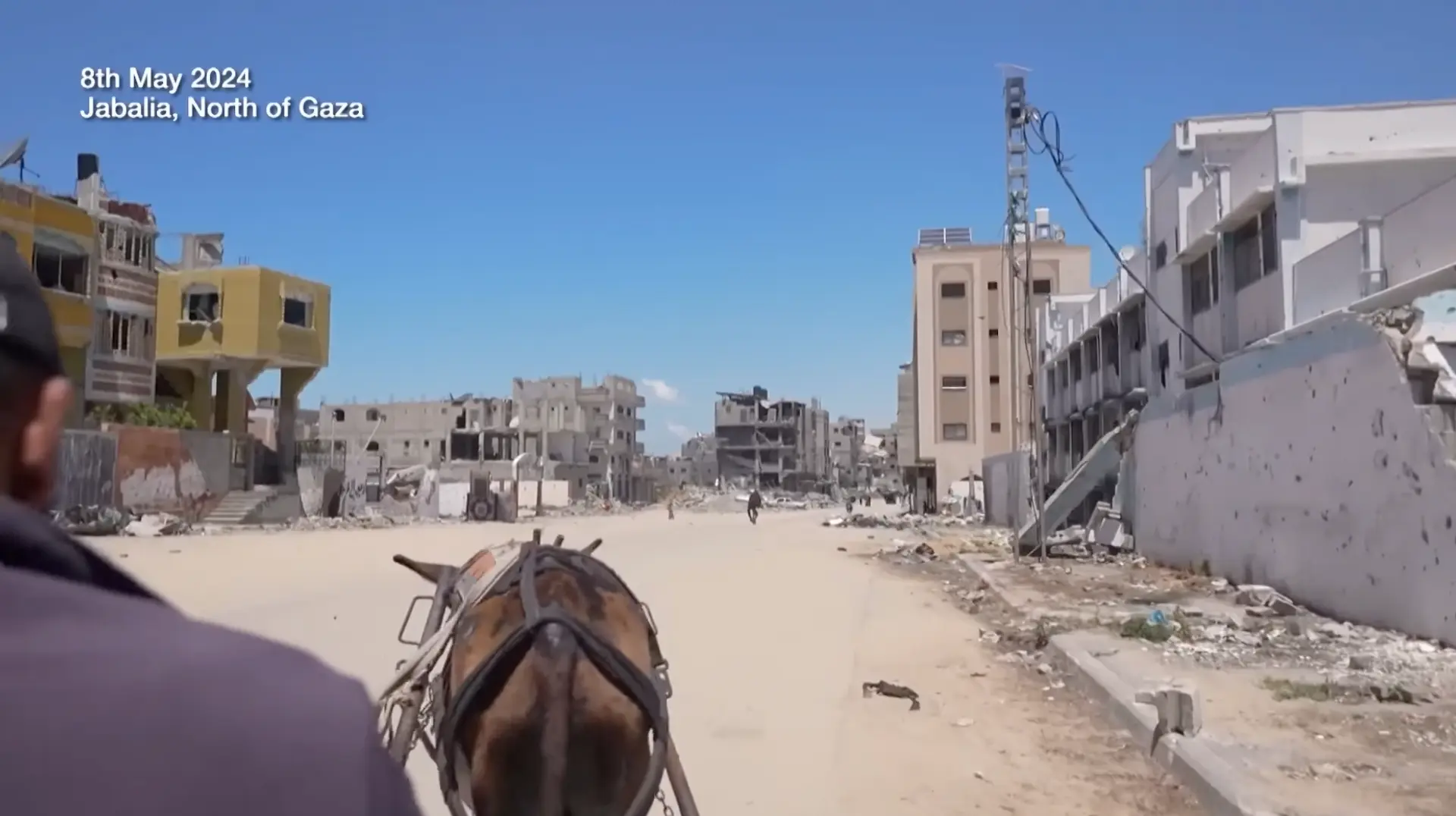
Gaza: Life Under Bombardment
Dispatch
After months of offensives, most of the territory is an uninhabitable field of ruins. 1.5 million people have been displaced, forced to constantly relocate by the advancing Israeli army. Gazans are barricaded by the sea to the west, the border with Israel to the north and east, and the border with Egypt to the south. Israel has forbidden international journalists from accessing the territory but, working alongside 29-year-old Gazan journalist Shrouq, we recount what is happening.
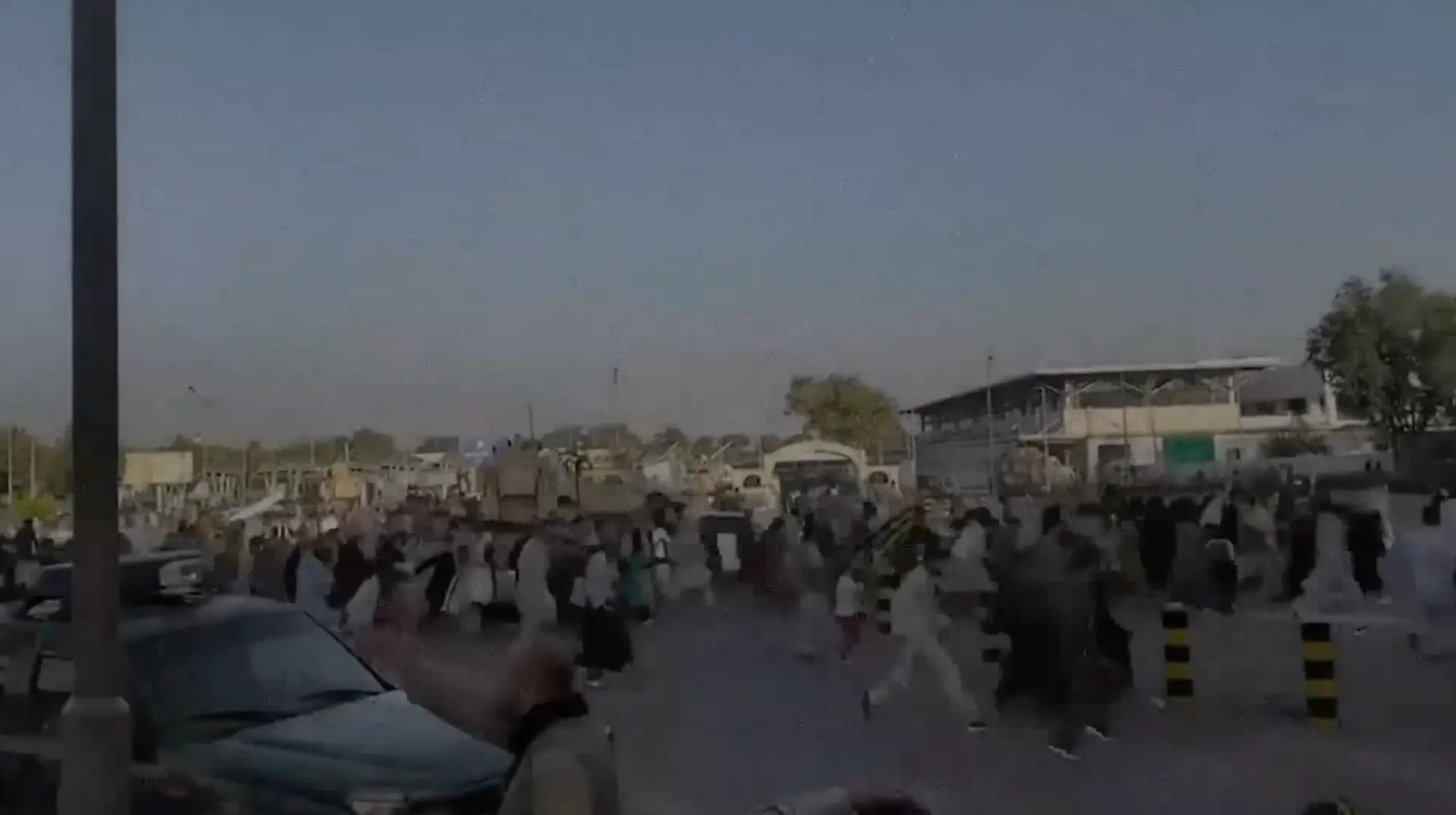
The Complete History of The Afghanistan War | Documentary: Part 1
Wars of the World
On Sunday 15th August 2021, after an almost 20 year-long absence, the Taliban recaptured the Afghan capital city of Kabul. As the US-led coalition withdrew, the Taliban regrouped and began expanding outward once again. Facing little opposition from the Afghan National Army that had been trained and equipped by western forces, they only grew bolder and began an almost Blitzkrieg-style campaign to retake villages, towns, cities and then entire provinces until they were once again in near-total control of a land that has seemingly only known bloodshed for the better part of fifty years.
The Complete History of The Afghanistan War | Documentary: Part 2
Wars of the World
On Sunday 15th August 2021, after an almost 20 year-long absence, the Taliban recaptured the Afghan capital city of Kabul. As the US-led coalition withdrew, the Taliban regrouped and began expanding outward once again. Facing little opposition from the Afghan National Army that had been trained and equipped by western forces, they only grew bolder and began an almost Blitzkrieg-style campaign to retake villages, towns, cities and then entire provinces until they were once again in near-total control of a land that has seemingly only known bloodshed for the better part of fifty years.

Lectures & Debates

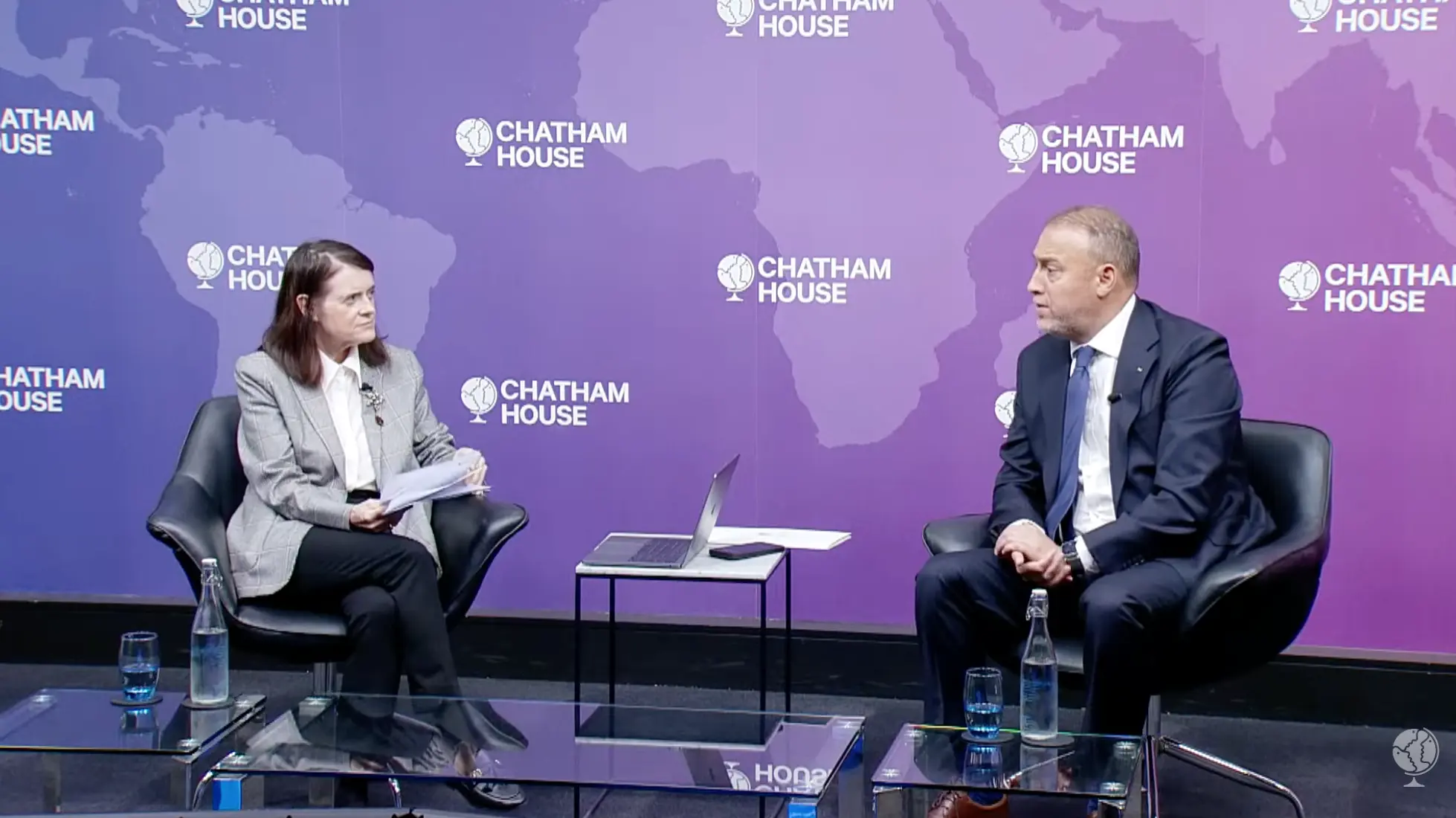
Husam Zomlot - Head of Palestinian Mission to the UK - In Conversation
Chatham House
Conversation with Dr Zomlot to discuss Israel’s military assault in Gaza, the humanitarian crisis in the territory, and growing international support for Palestinian statehood at the United Nations General Assembly in New York in September 2025.
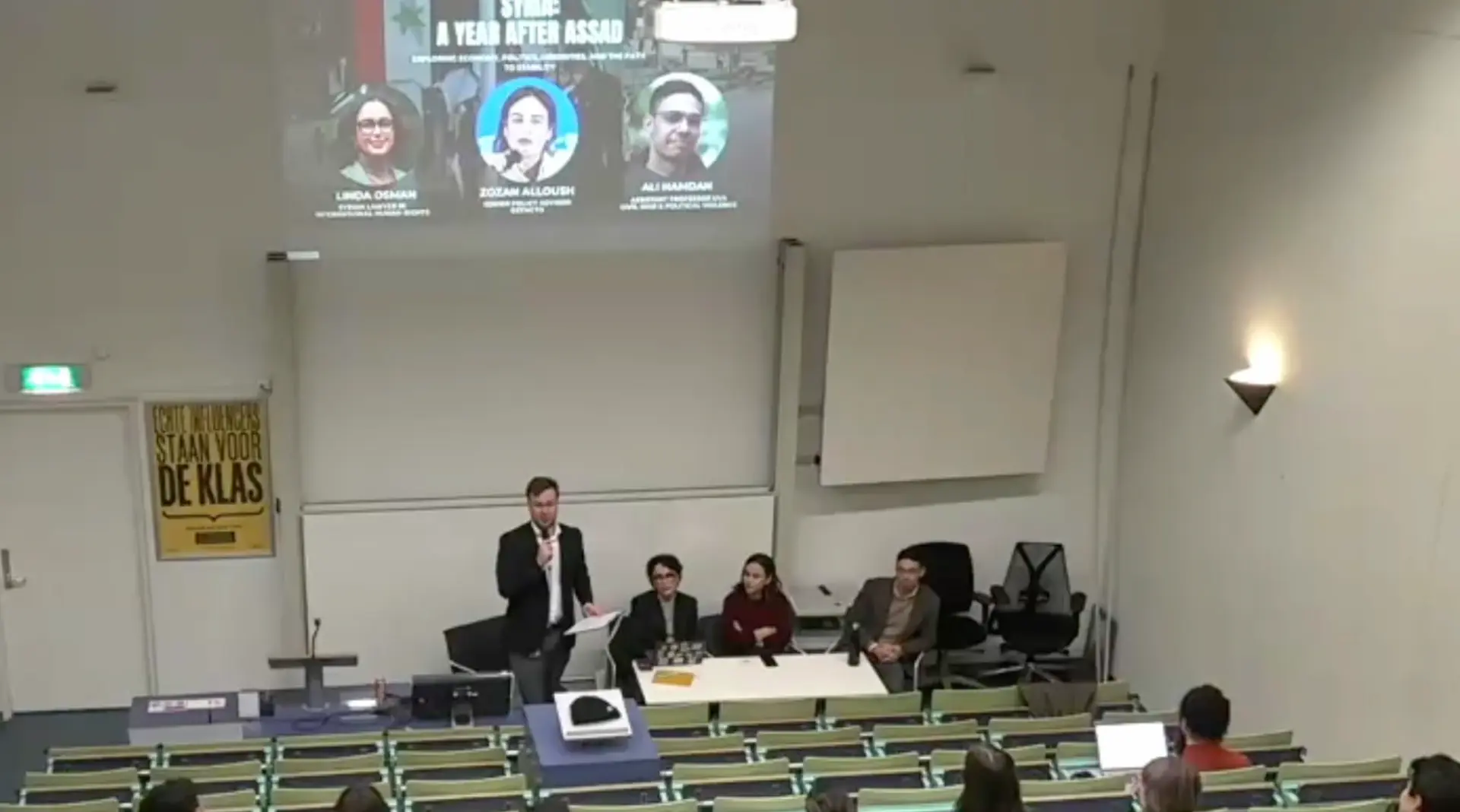
Panel Discussion: The Future of Syria — One Year After the Fall of the Assad Regime
Foundation Max van Der Stoel
On the third of December, we hosted a timely and insightful panel marking one year since the fall of the Assad regime. Our speakers — Linda Osman, Zozan Alloush & Ali Hamdan — shared their perspectives on Syria’s path toward stability, the state of the economy, and the role of minority groups in the country’s rebuilding process.
A Short History of Iraq
Harvey Hartmann
A Short History of Iraq, by Harvey Hartman, traces Iraq's history up to the Second Gulf War. This lecture uses social science tools to analyze Iraq's complex history, beginning centuries before 2003. The video explores the country's deeply divided society, its state formation, and the crucial role of oil.
Israel-Palestine: The Health of Gaza
Chatham House
In this video, experts will discuss: the current state of the Gaza health care system six months into the conflict, the most pressing medical needs at the moment, how medical aid is getting into the country and the challenges in doing so, and how regional and international actors can help support Gaza’s public health system after a cessation of hostilities. This event is part of Chatham House’s ongoing work focusing on the Israel-Palestine conflict.
Voices from Gaza & Israel
This event brings together voices from Gaza and Israel to explore how humanitarian solutions and a debate that unites rather than divides can look. Through personal stories, lived experiences, and open dialogue, the panel sheds light on paths toward peace, mutual understanding, and coexistence beyond political frontlines.
Revitalizing Post War Lebanon and the Arab World
FAFS Lecture Series
Dr. Turki Faisal Al Rasheed—renowned agricultural expert, author, and sustainability leader—delivers a powerful lecture on how sustainable development can drive recovery in Lebanon and the Arab world. Using the UN SDGs as a framework, he explores social agriculture as a path to resilience, inclusion, and environmental restoration.
Israel-Palestine: The implications for Jordan
Chatham House
In this webinar, a panel of experts examine how the war in Gaza is affecting Jordan and focus on short and long-term domestic consequences, security ramifications of the Gaza war and its regional spillover., implications for the future of Israel–Jordan relations, and Jordan’s diplomatic role in the region.
Palestine is now recognised by the UK. What happens next?
Chatham House
The panel will assess whether recognition opens a real pathway to sovereignty, or whether it risks becoming a largely symbolic gesture.
Keeping It Together? Syria's Post-Revolution Future | Townhall
Munich Security Conference
Lorem ipsum dolor sit amet, consectetur adipiscing elit, sed do eiusmod tempor incididunt ut labore et dolore magna aliqua. Ut enim ad minim veniam, quis nostrud exercitation ullamco laboris nisi ut aliquip ex ea commodo consequat. Duis aute irure dolor in reprehenderit in voluptate velit esse cillum dolore eu fugiat nulla pariatur. Excepteur sint occaecat cupidatat non proident, sunt in culpa qui officia deserunt mollit anim id est laborum.
Regional Integration & The Israeli-Palestinian Conflict
JStreet22
J Street is the political home for pro-Israel, pro-peace, pro-democracy advocates.
Empowering Women in Afghanistan: The way forward
Swedish Committee for Afghanistan
On the International Women’s Day an online seminar hosted by the Swedish Committee for Afghanistan in collaboration with the Swedish Section of Women’s International League for Peace and Freedom, WILPF Sweden (IKFF) and International Rescue Committee (IRC) on the dire situation for women and girls in Afghanistan.

Articles, Reports & Books

The Outbreak of the Arab Spring
Erica Chenoweth (Middle East Institute)
Overview of the Arab Spring in 2011 in all countries.
A Decade in Movement in Contemporary Arab Cinema
Rabih El-Khoury (Deutsches Filminstitut & Filmmuseum)
An Overview of Contemporary Arab cinema and evolvement of the themes, particularly after the Arab Spring
Islamism and Nationalism: How Did Old Enemies Become New Allies?
Ahmet T. Kuru
Rise of Islamism in the MENA region and duality between religious and secular system

Educational Resources

Middle East Explained
North Carolina Consortium for Middle East Studies
The Middle East Explained project is a video series. Videos are 5-10 minutes long and are accompanied by a discussion framework for use in middle and high school classrooms.
New Approaches to the 9-12 US Curriculum on the Middle East and North Africa
Center for the Study of the Middle East (CSME) at Indiana University
This curriculum consists of 15 lesson plans to help U.S. World History high school educators teach about the Middle East and North Africa (MENA) in their classrooms. There are 5 themes: Gender, Plural Identities, Empire & Nation, Political & Social Movements and Arts & Technology.
The Year That Shook the World: The 1979 Iranian Revolution
Near Eastern Studies: NYU
Students will identify the causes of the revolution and examine Iranian and U.S. perceptions of the revolution
Islam and Politics
Georgetown University
This unit presents critical moments and influential religious leaders in the pre-colonial and colonial periods. This unit also explores a variety of Islamist movements, including Ennahda in Tunisia, the Muslim Brotherhood in Egypt, the Islamic Revolution in Iran, and Al-Qaeda and the Islamic State in Iraq and Syria (ISIS)
Middle East Studies
Georgetown University
This course will help students understand how the study of the Middle East relates to imperial and colonial interests in the region; how struggles for women’s rights and national independence intersect and diverge in the region’s two largest countries, Egypt and Iran; and how the conflict between Israelis and Palestinians has evolved over the past century.
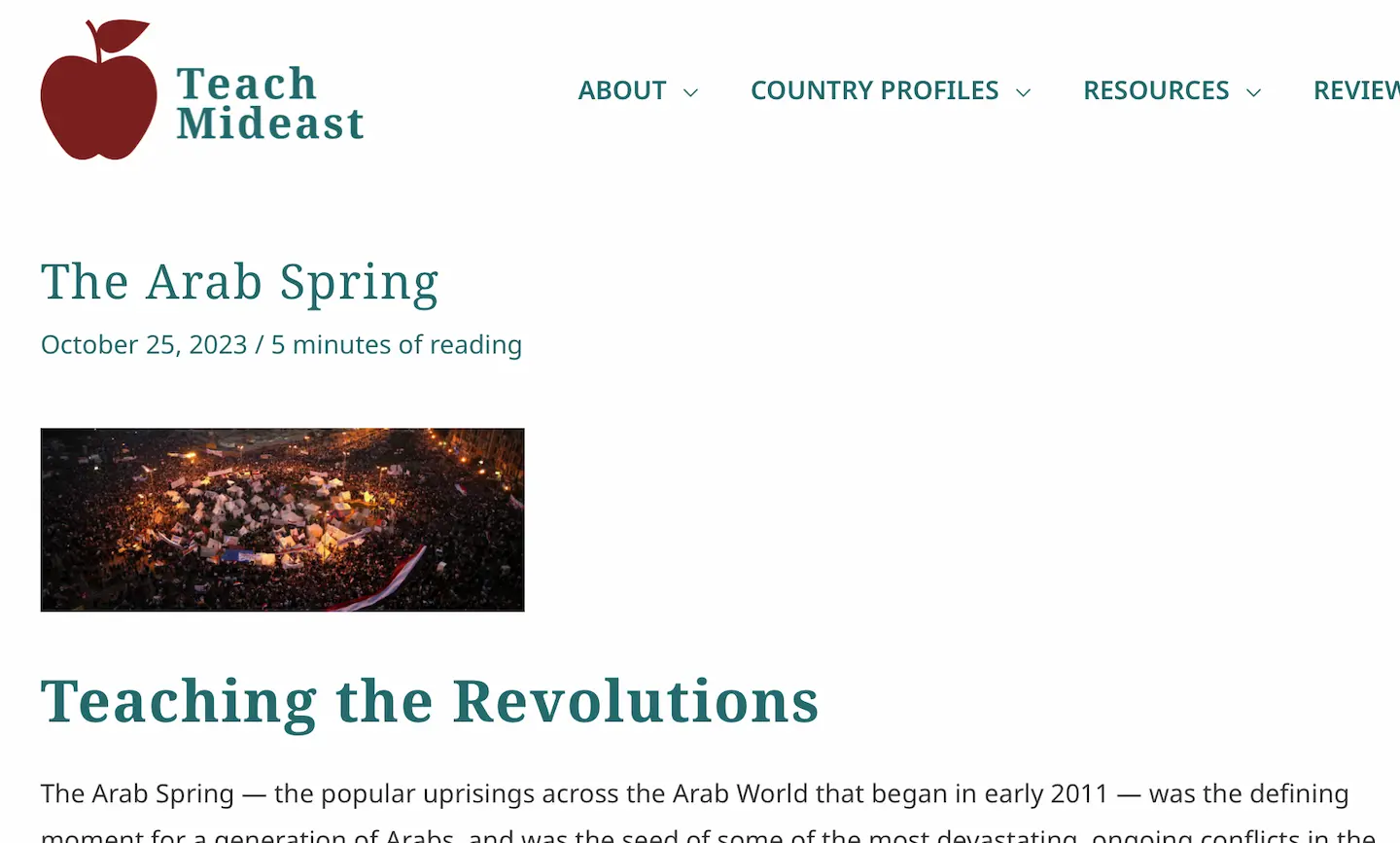
The Arab Spring
TeachMideast
Talks about reasons for the revolt, timeline of the uprisings, methods of rebellion and aftermath, etc.
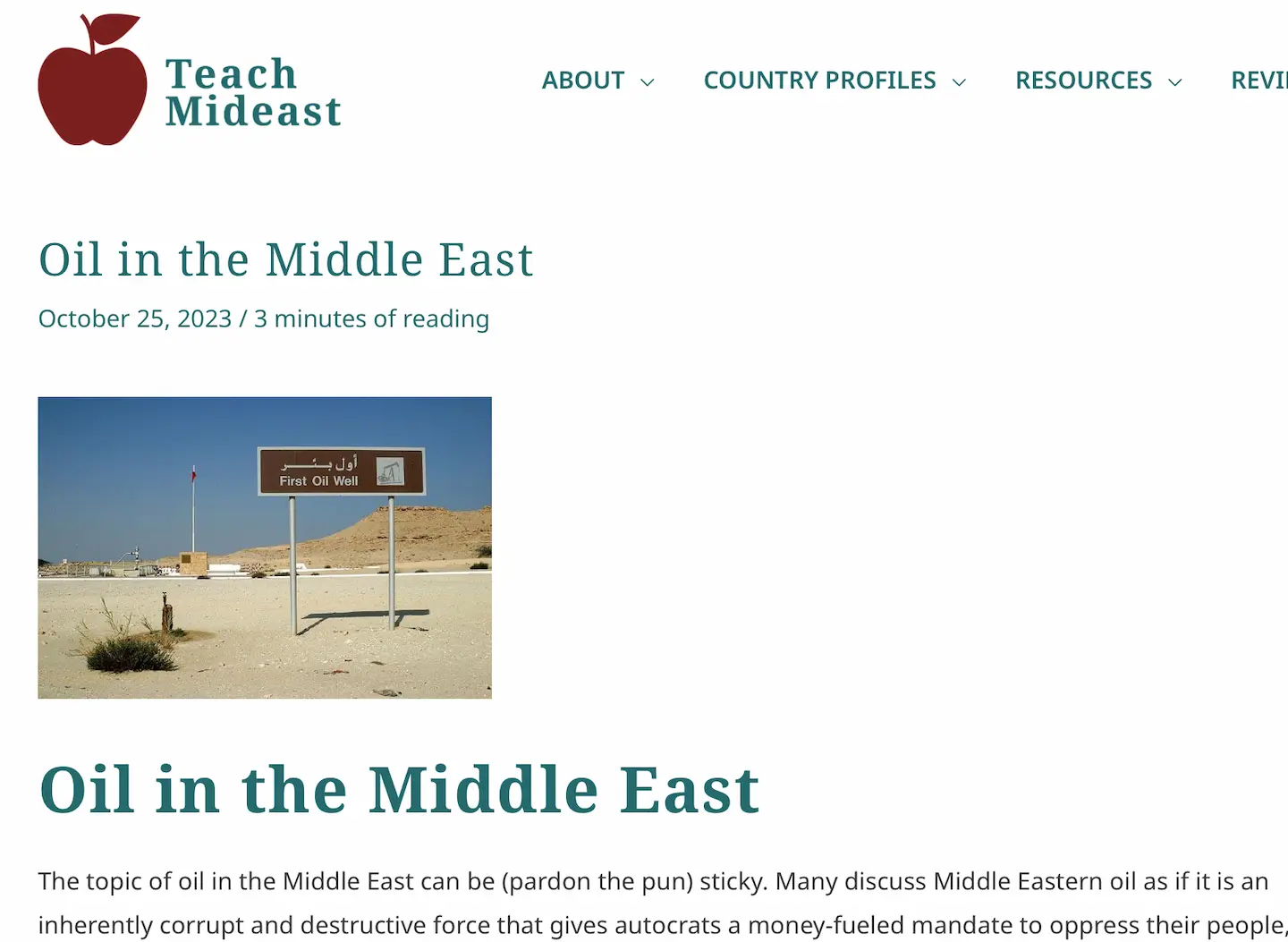
Oil in the Middle East
TeachMideast
Discuss where oil comes from, how oil affects the economy in the Middle East and US foreign oil policy, etc.
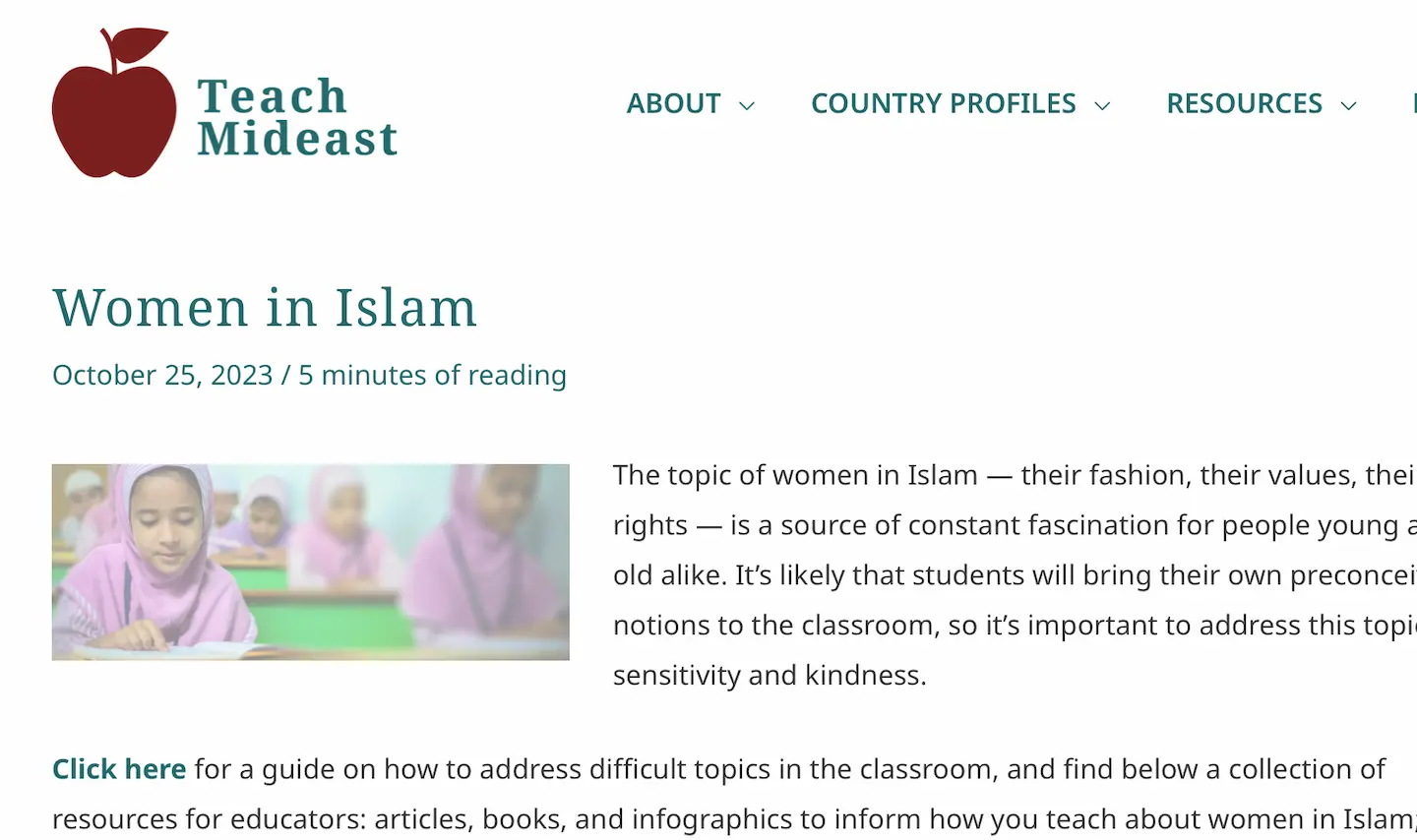
Women in Islam
TeachMideast
Talks about women's rights in Islam, women in Islamic history and marriage and divorce in Islamic countries, etc.
Global Connections: The Middle East
PBS
Different maps of Muslim populations, historical borders and ethnic groups. The source also explores themes such as the role of women, oil, natural resources, and religious militancy.
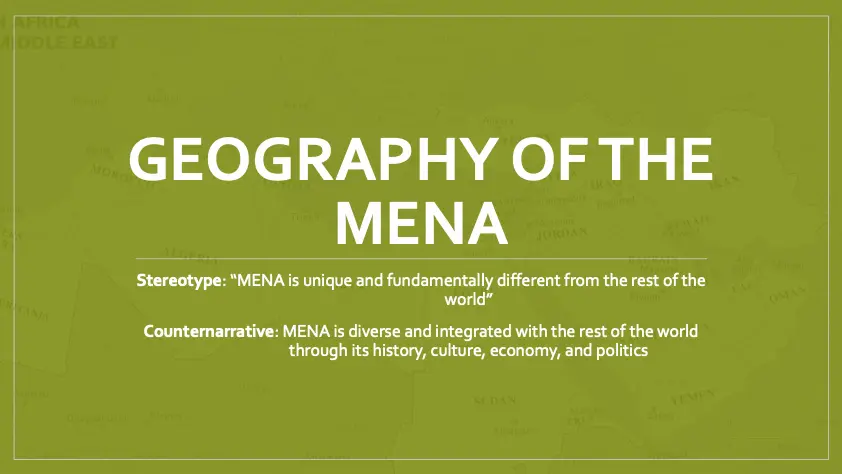
Geography of the MENA region
Colorado State University
Different images of the Ottoman Empire, Islamic World and imperialism in the Middle East, etc. The resources also ask different questions, such as "What are some of the region’s prominent environmental features?"

Stats, Databases & Infographics

Refugees in the MENA region
UNHCR
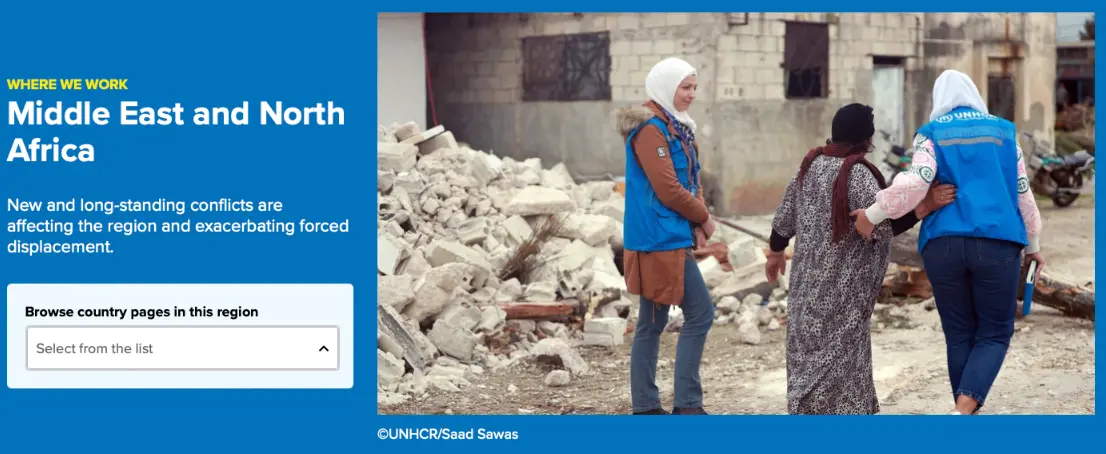
Almost 2.4 million refugees were hosted in the MENA region by the end of 2024.
People in need in MENA
UNICEF
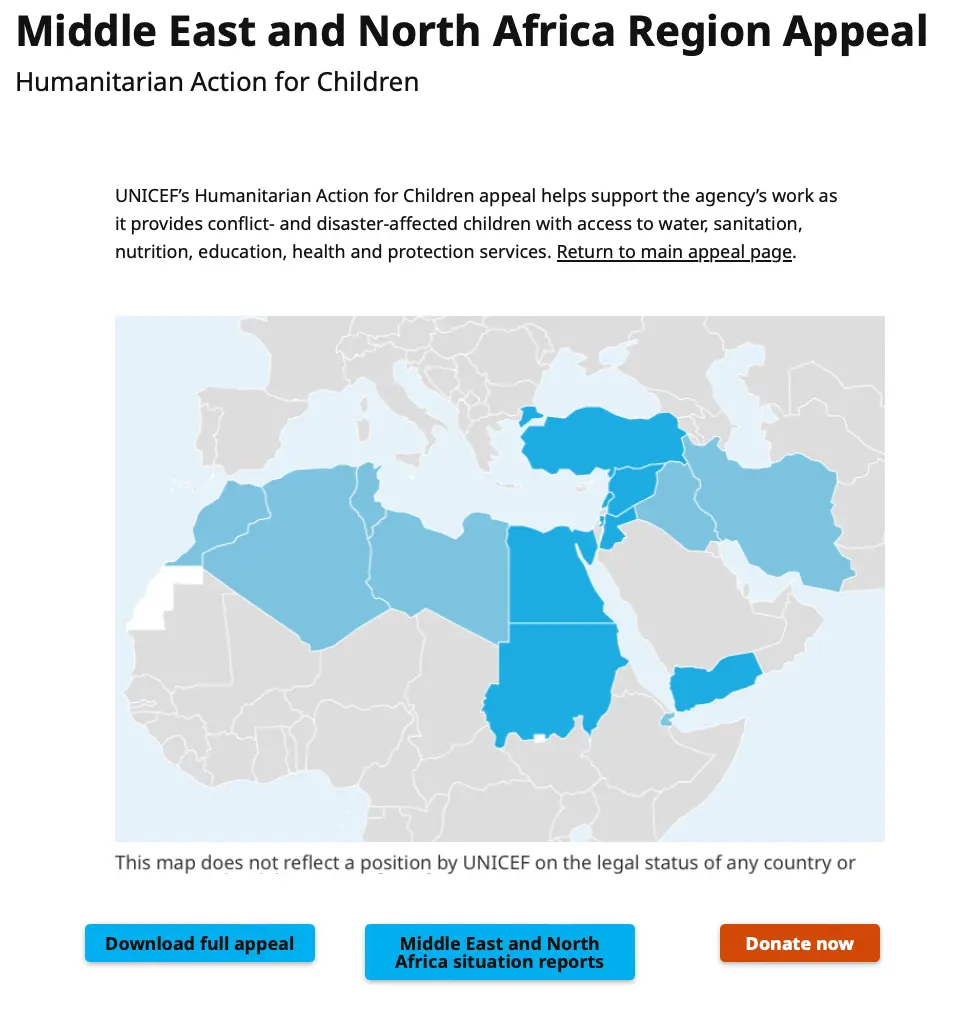
92.6 million people are in need of humanitarian assistance
Forced displacement in MENA region
UNHCR
By mid-2025, more than 17.8 million people were forcibly displaced or stateless across the region.
Ethnic Groups
Council on Foreign Relations
There are more than ten different ethnic groups in the MENA region. While Arabs comprise the majority of the population, the region is also home to Berbers, Kurds, Jews, Persians, Turks, and an array of other ethnic and religious minorities.
Level of Peace
Global Finance
The Middle East and North Africa (MENA) region remains the least peaceful region globally, and is home to four of the ten least peaceful countries in the world.
Civic Space Restrictions
Civicus Monitor
The five most reported human rights violations in MENA in 2025 were detention of Human Rights Defenders (HRDs), detention of journalists, judicial harassment, censorship and deportation of HRDs.
Youth Demographic
IOM
Over 60 percent of the region’s population is under 30 and youth unemployment stood at 24.4 per cent in 2023.
Female Labour Force Participation
World Bank
The average regional female labour force participation (FLFP) rate is 19%, compared to 71% of men. This compares to a global rate of 47%.
Level of Freedom
Freedom House
More than 90 percent of people in the Middle East live in countries rated Not Free, according to Freedom House’s 2024 report.
Total Population
World Bank
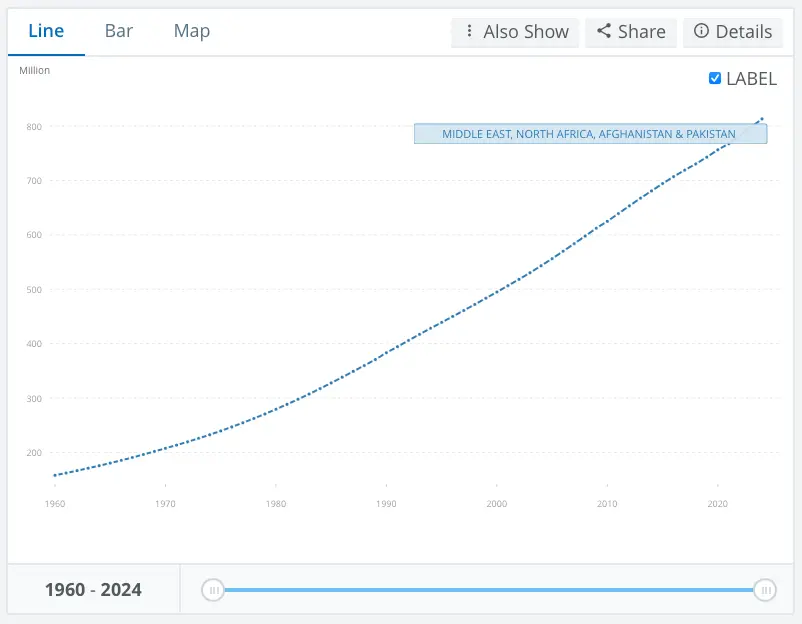
The total population in the Middle East, North Africa, Afghanistan and Pakistan is over 800,000,000
Child Food Poverty
UNICEF
Approximately 34 million children under five years of age, or three in every five in the MENA region are experiencing child food poverty.
Informal Employment
World Bank
Informal employment in MENA accounts for about 40 to 80 percent of total employment.

Common Questions About the Region

Show more

How many UNESCO World Heritage sites are in the Middle East and North Africa?

Click here to show content

There are 90 UNESCO World Heritage sites across the Middle East and North Africa (MENA) region. These include ancient cities like Babylon (in current day Iraq) and Thebes (Egypt). The region is also home to many major religious sites including Mecca and the Great Mosque as well as the Old City of Jerusalem.

How much of the population lives in slums?

Click here to show content

Slums are widespread in the MENA region, with over 24% of the urban population estimated to be living in slums.

No items found.

How many oil and gas reserves are found in the MENA region?

Click here to show content

Over 50% of global oil reserves and 25% of global natural gas reserves are found in the MENA area, according to the Organization of the Petroleum Exporting Countries (OPEC) estimates.

No items found.

What are the main religion(s) in the MENA region?

Click here to show content

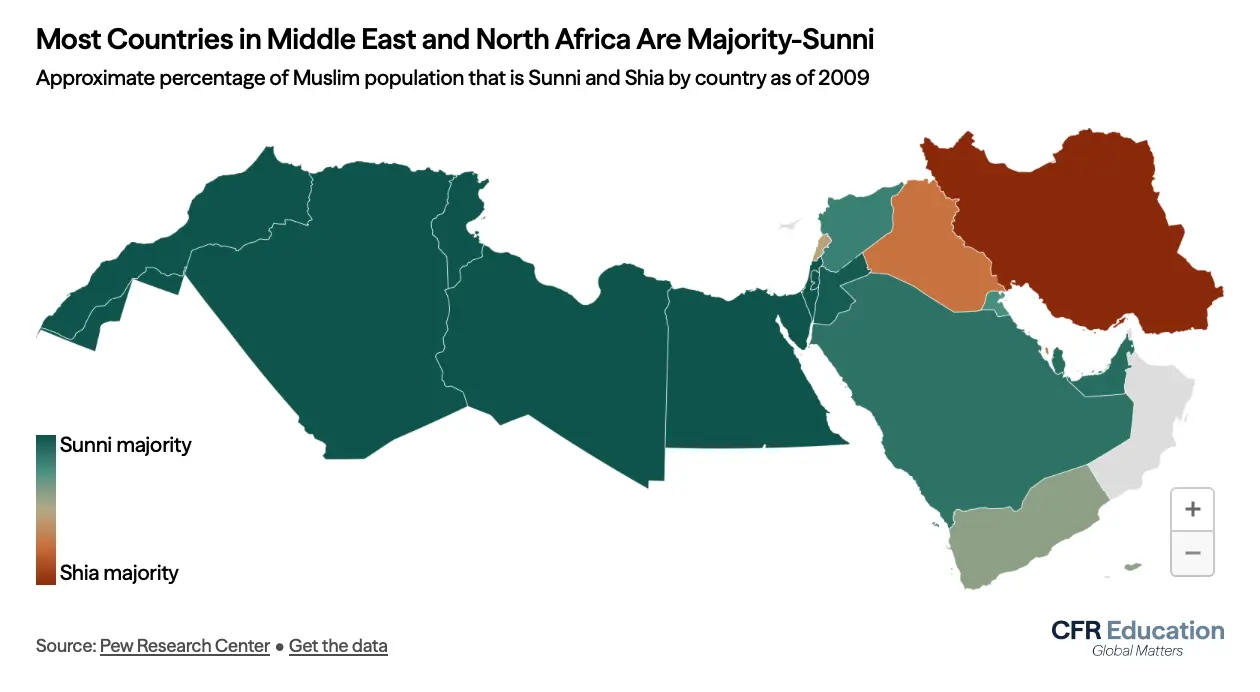
The Middle East and North Africa (MENA) region is predominantly Muslim. About 94% of the population follows Islam, making it the dominant religion in the region. Christianity is the largest minority religion, representing around 3% of the population. Judaism accounts for less than 2%, with most Jewish people living in Israel. Other religions and smaller religious communities make up only a very small share of the population.

No items found.

Does the MENA Region have one of the poorest human rights records?

Click here to show content

Many international reports indicate that the MENA region has one of the weakest human rights records globally, with nearly 80% of countries rated Not Free. While some nations, such as Jordan, have made modest democratic gains, the majority of the region continues to experience authoritarian rule, limited political participation, and widespread restrictions on civil liberties.

No items found.

Why do many countries of the MENA region have dictatorships or authoritarian systems?

Click here to show content

Authoritarian systems persist in many MENA countries because citizens, while still valuing democracy, often feel that democratic institutions have failed to deliver security, equality, and basic services. As a result, support for alternatives—such as strongman rule, benevolent dictatorships, or shari‘a-based governance—has grown in places where democracy is seen as ineffective.

No items found.

About This Project

The Middle East & North Africa project aims to provide a comprehensive portrait of the broad socio-political situation in the region.

Created in collaboration with Candid.Foundation.
Candid Foundation logo

Help Us Build It!

By joining our membership community, you can help us move forward.